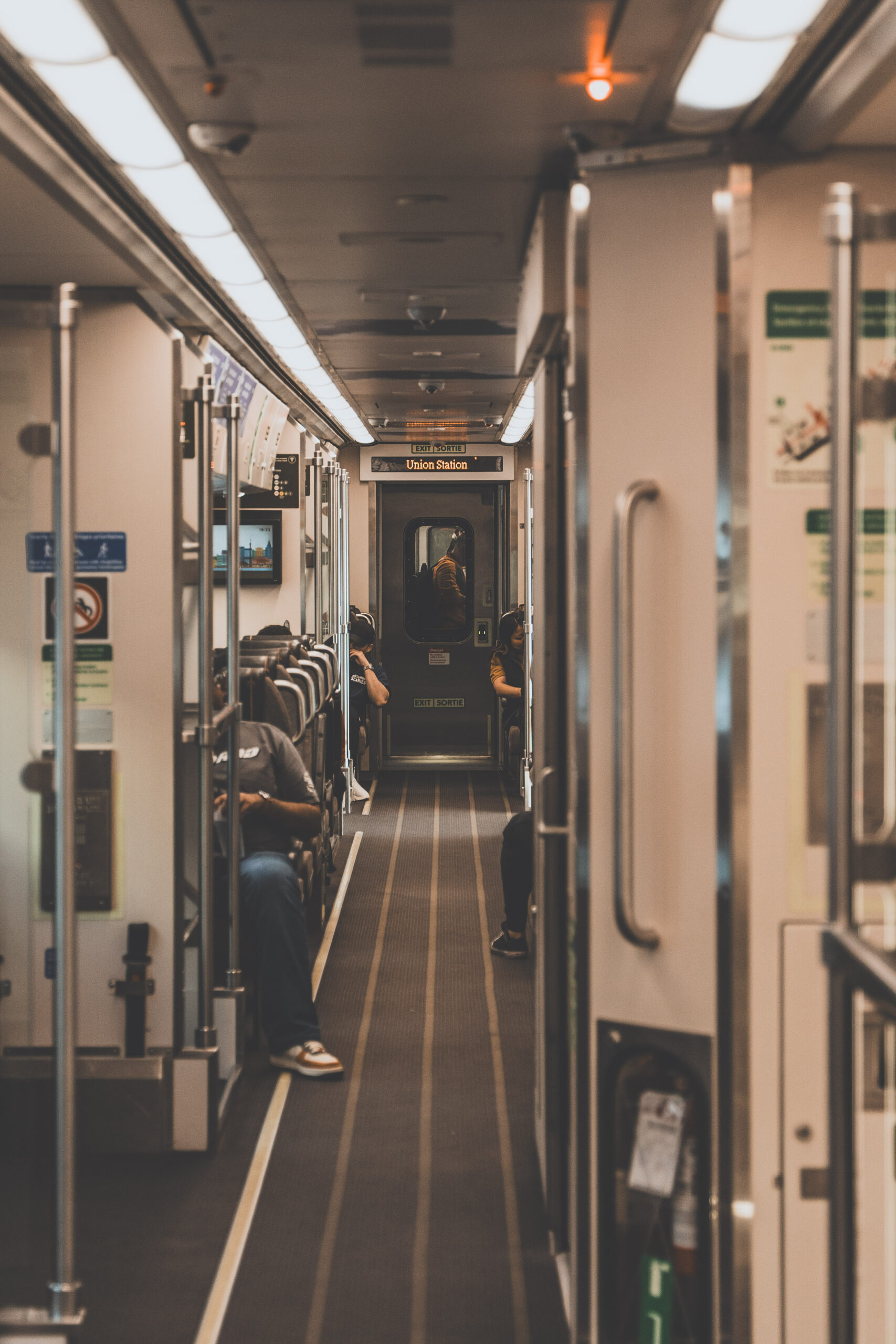
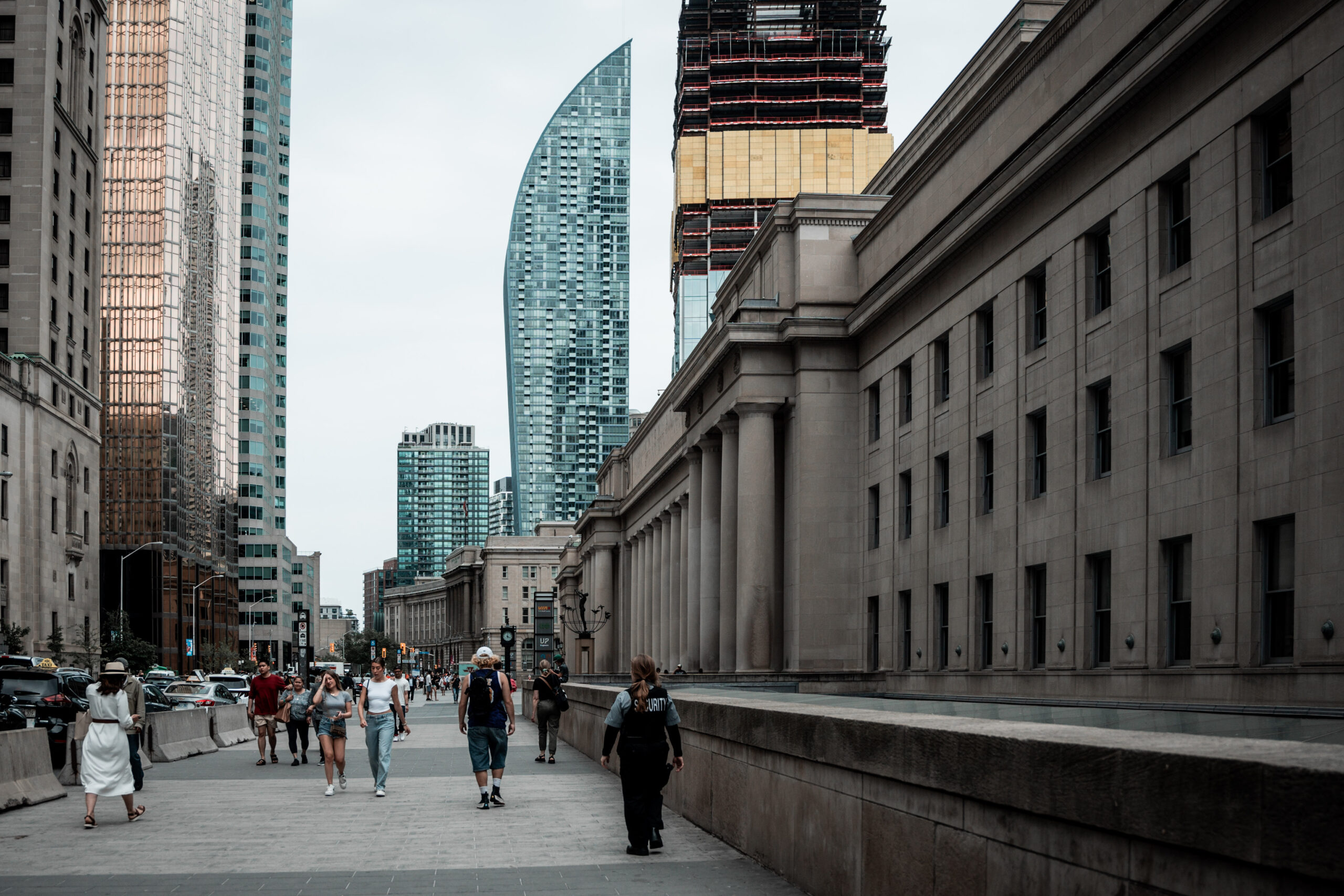
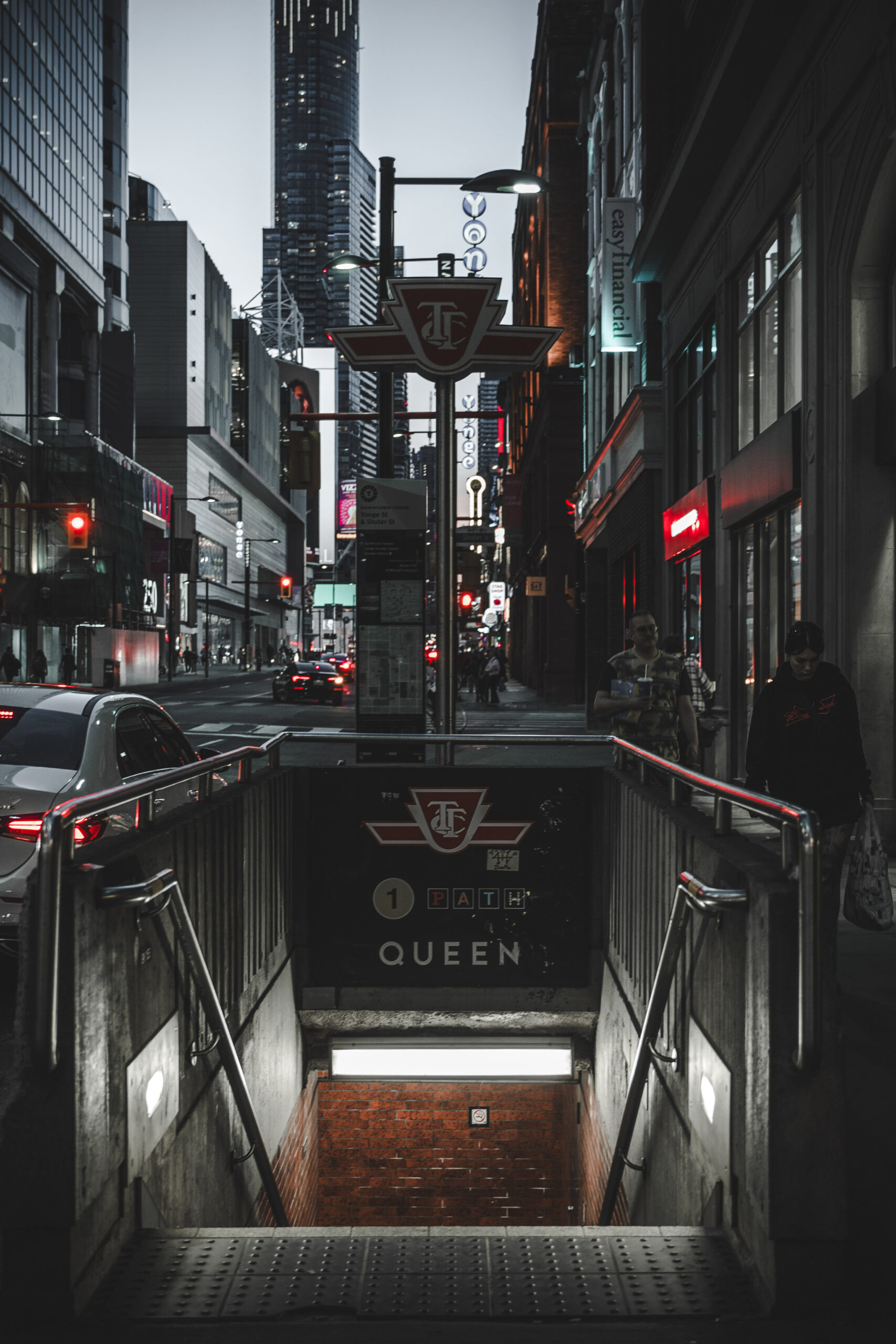
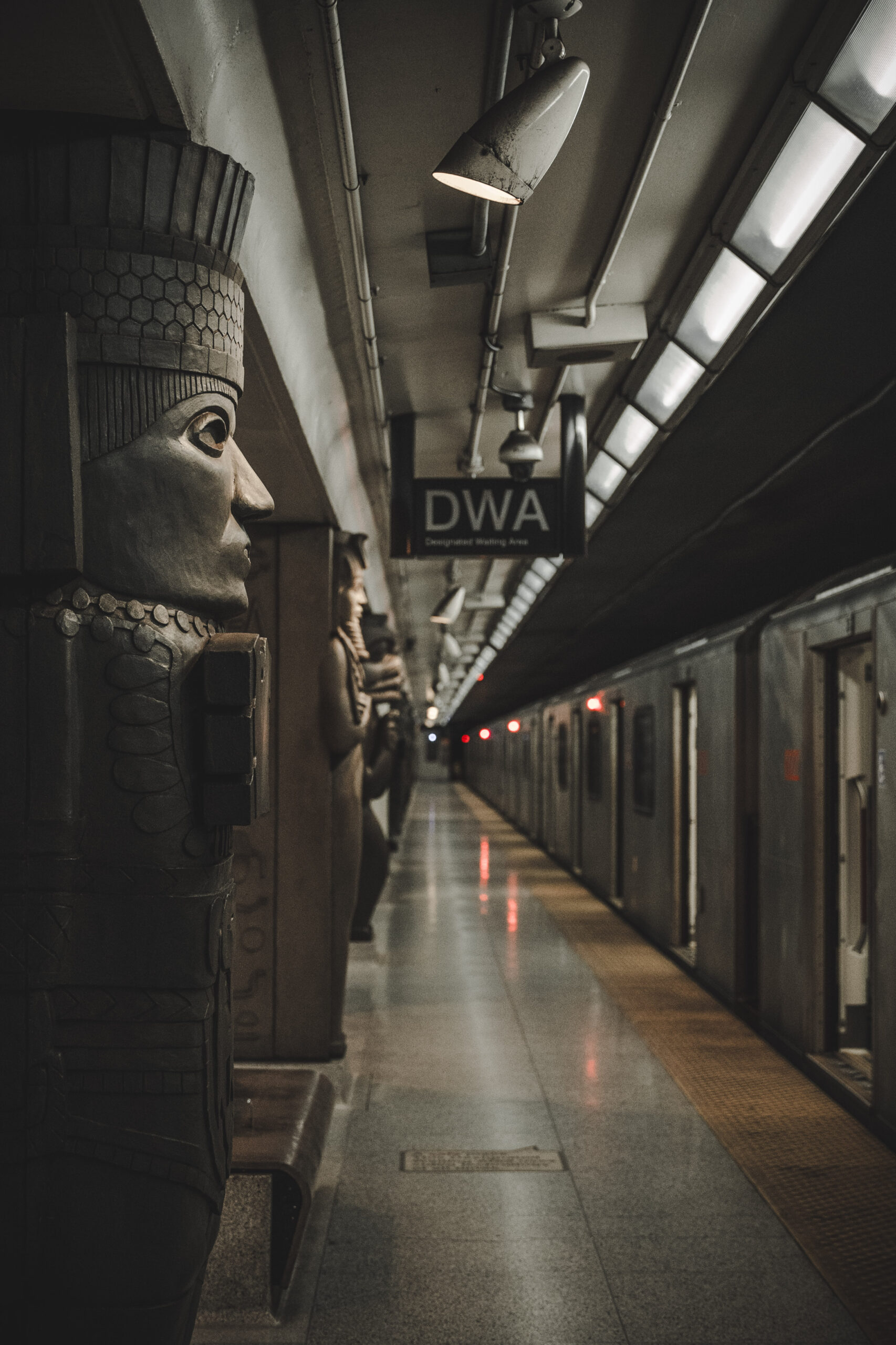
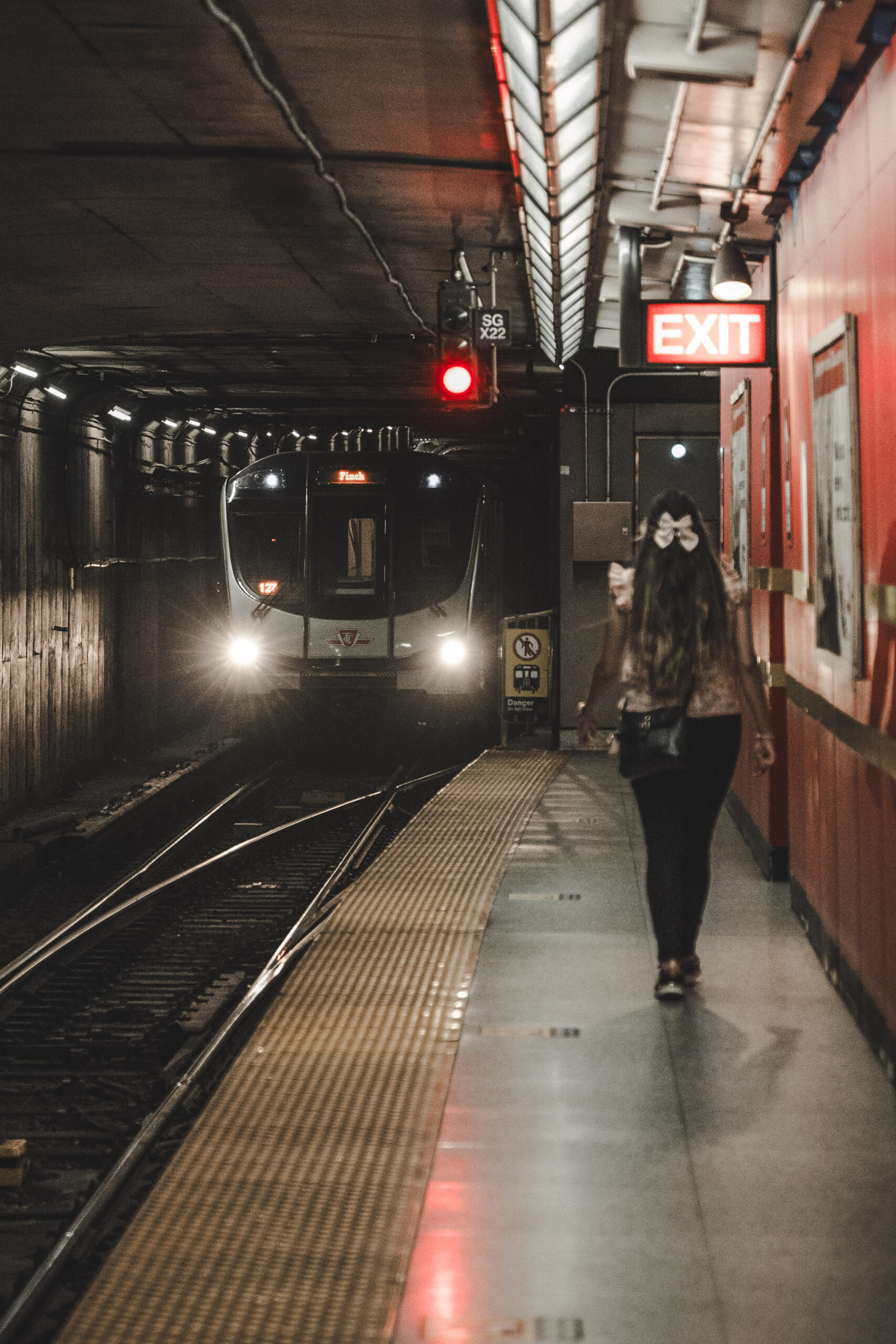
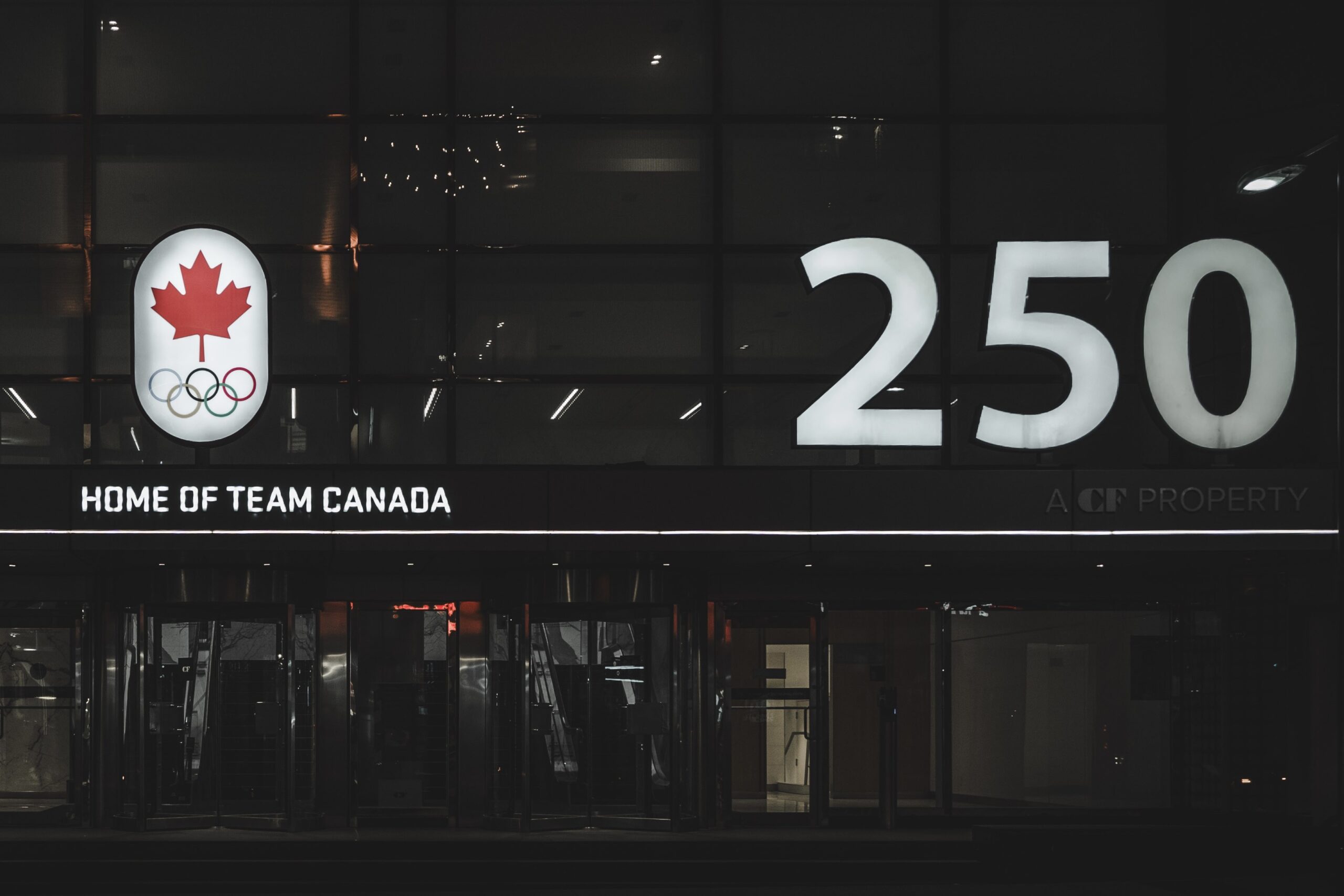
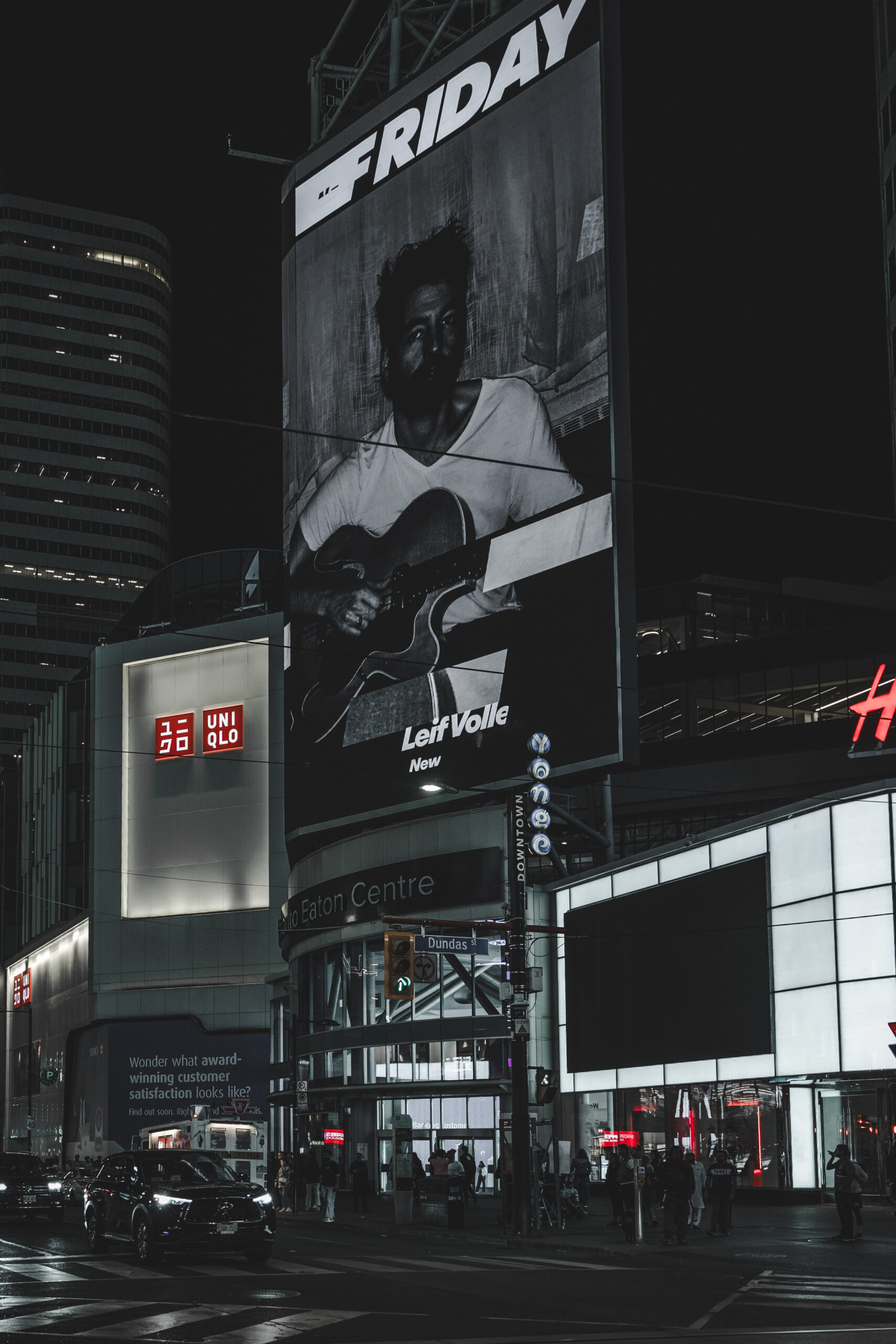
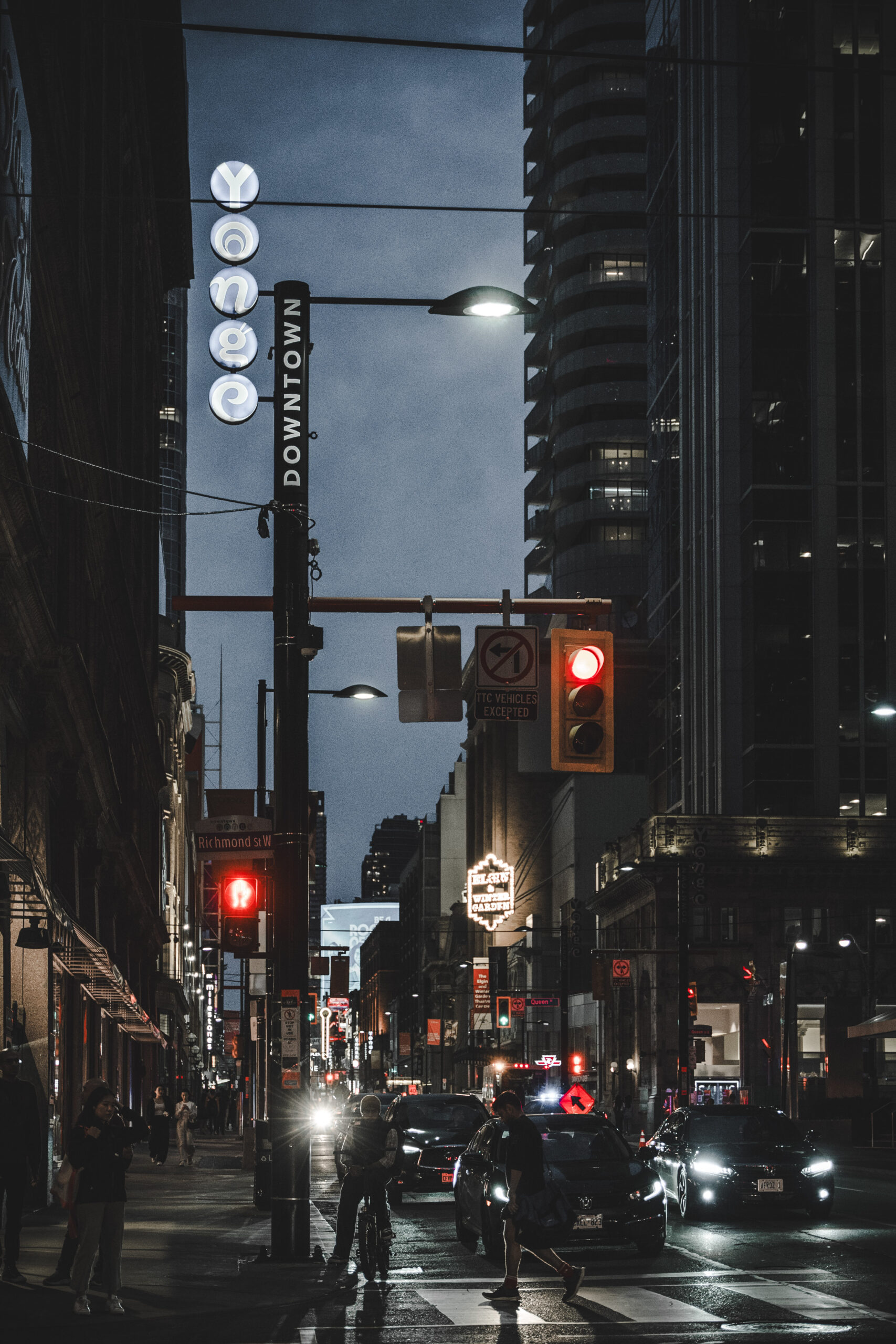
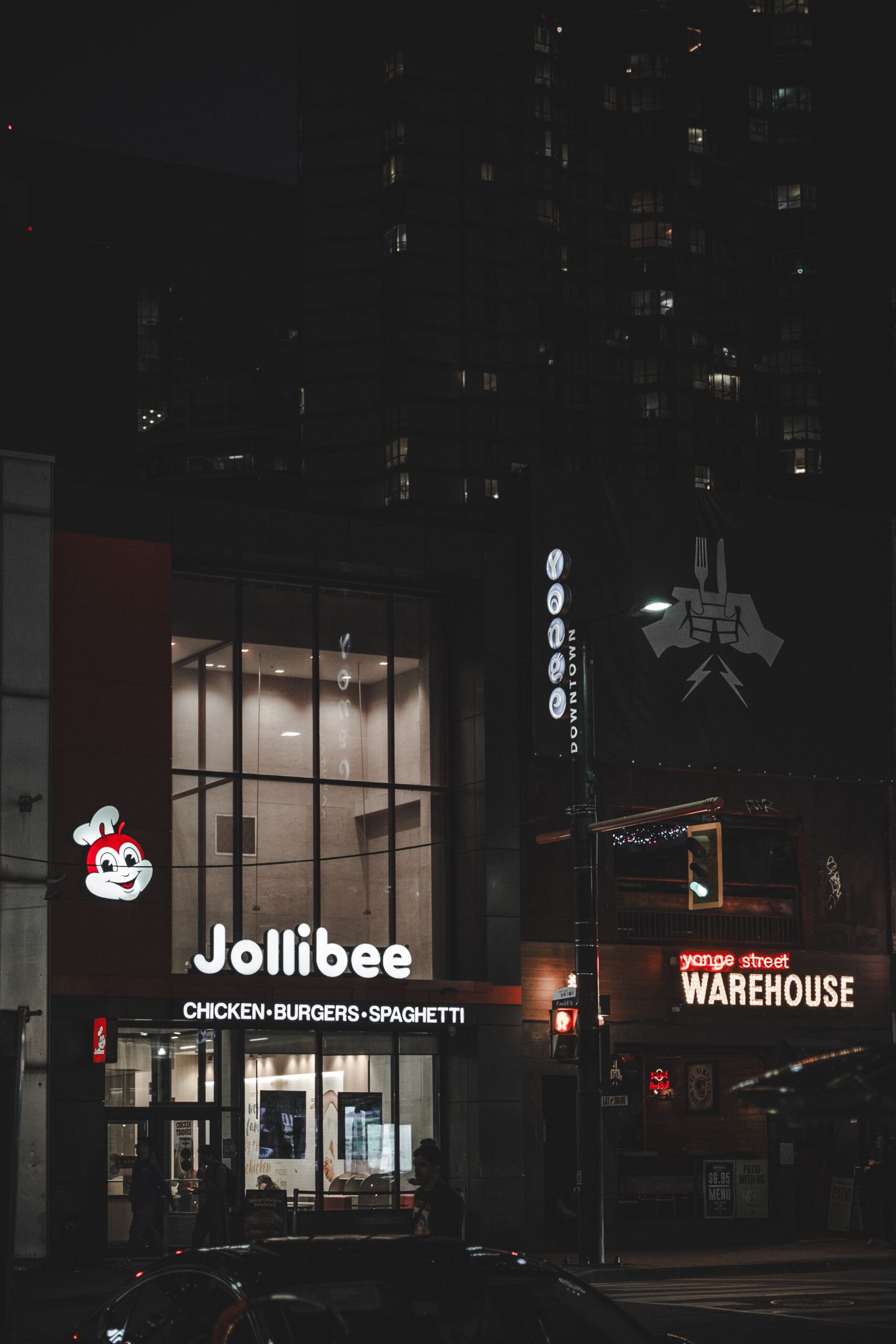
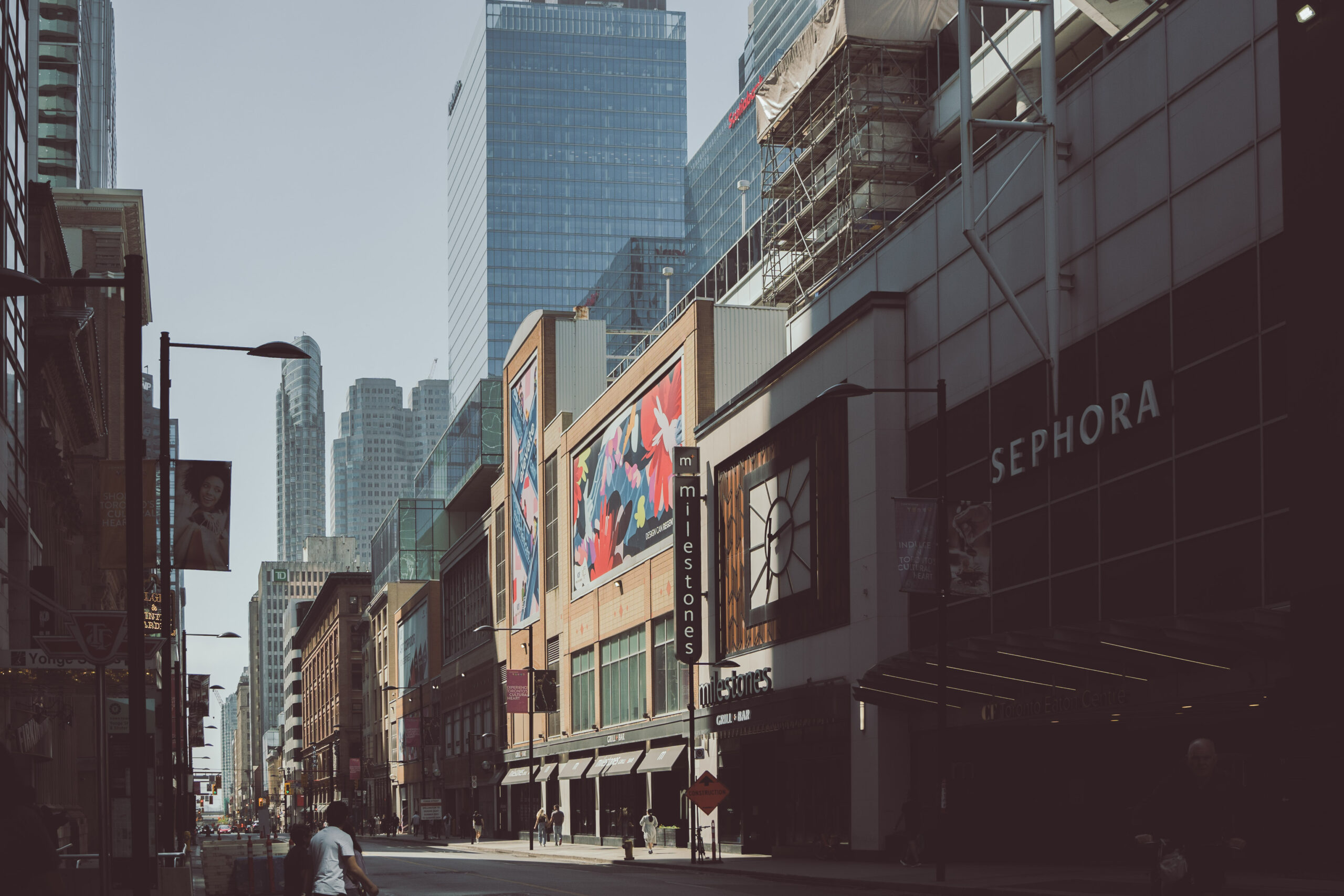
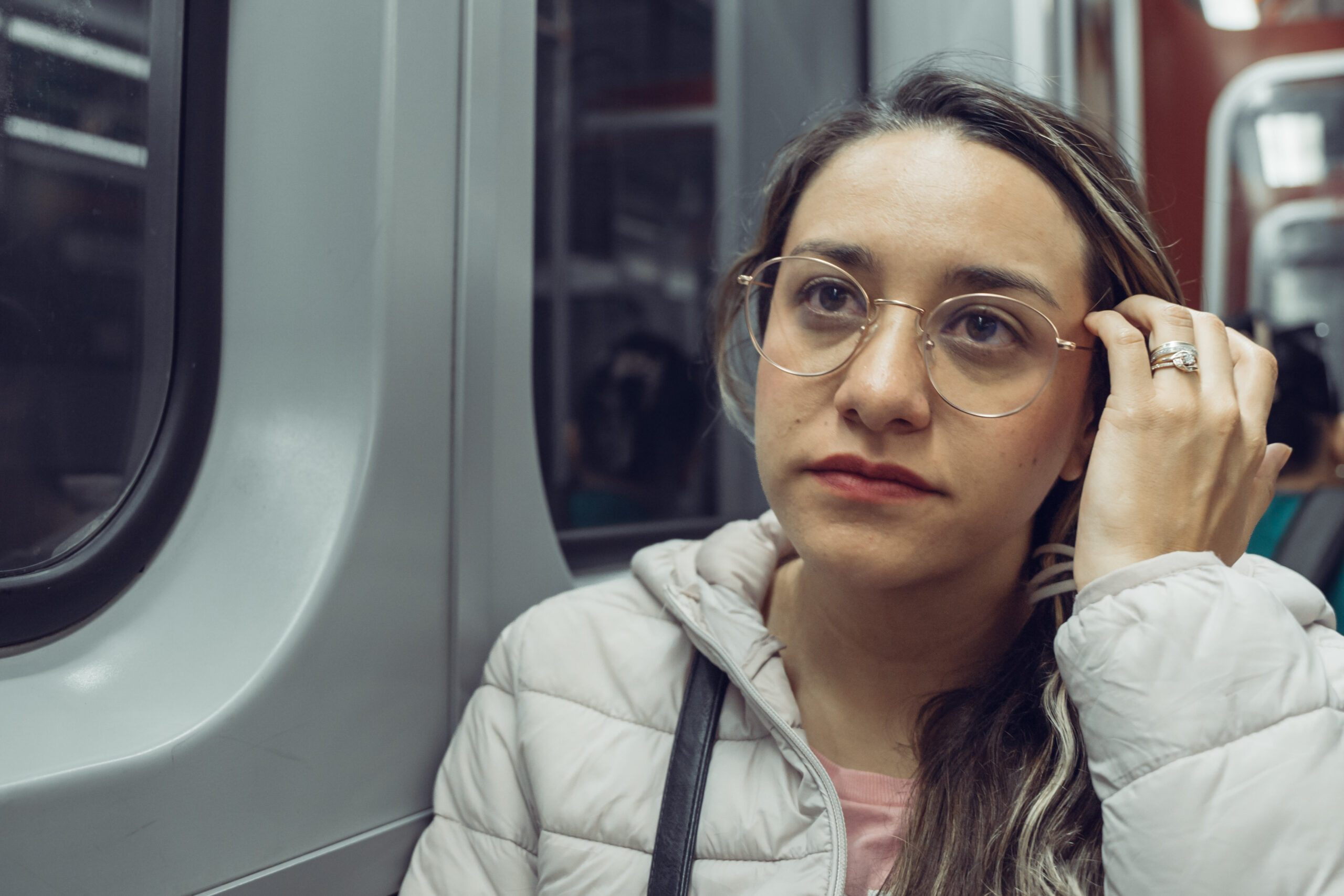
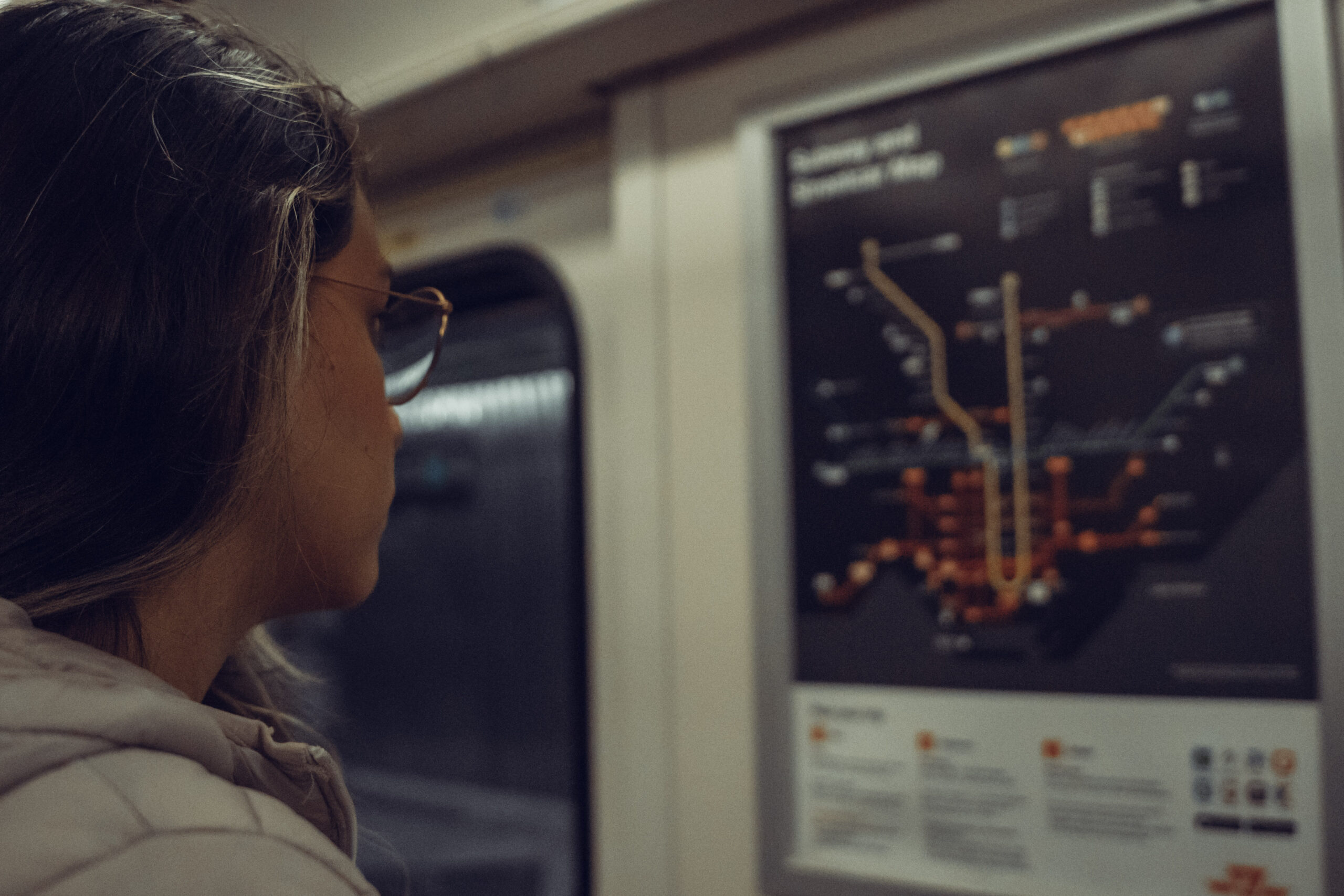
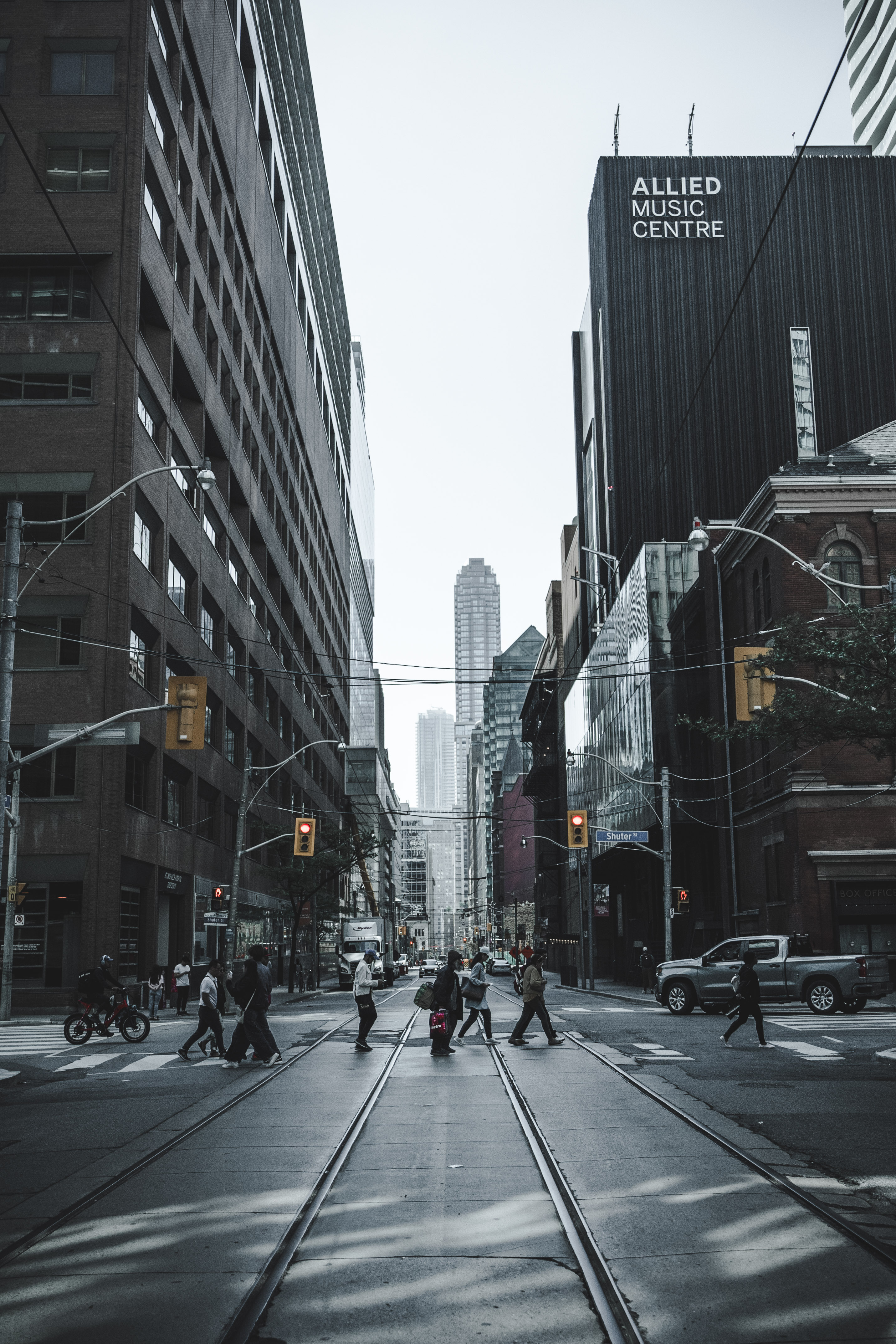
We went in May, escaping from the hellish heat of Mexico City in the Summer. We landed at Pearson International and took the UP Express to Union Station. It’s a direct train to downtown, no hassle. Union Station is one of those classic North American stations—huge, European, echoing, full of people who all seem to be headed somewhere. We got lost, as you’re supposed to the first time. We came out to the subway and from there walked to our Airbnb, right in the heart of downtown: just one block from the Eaton Centre and very close to Yonge Street, once famous for being considered the longest street in the world.
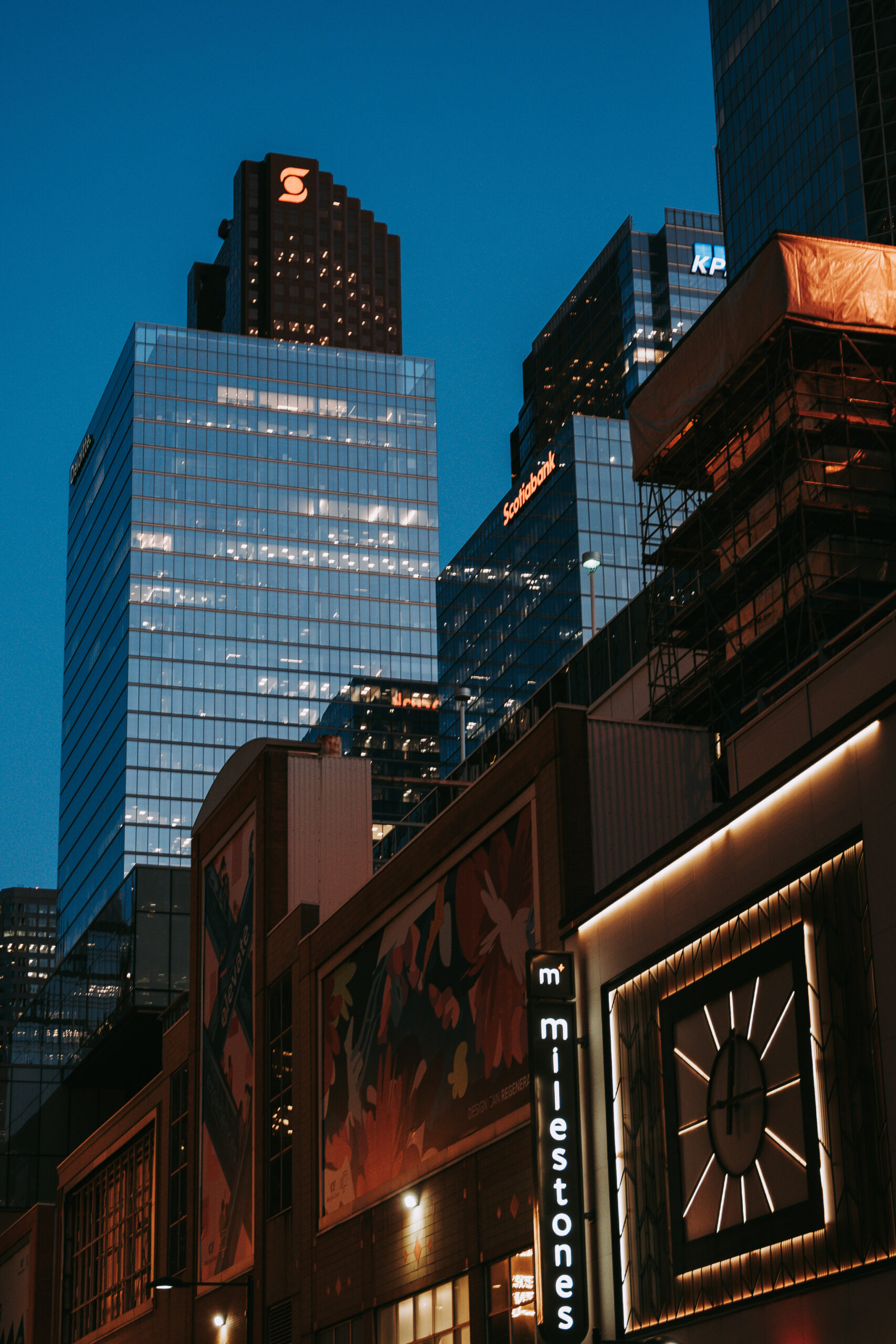
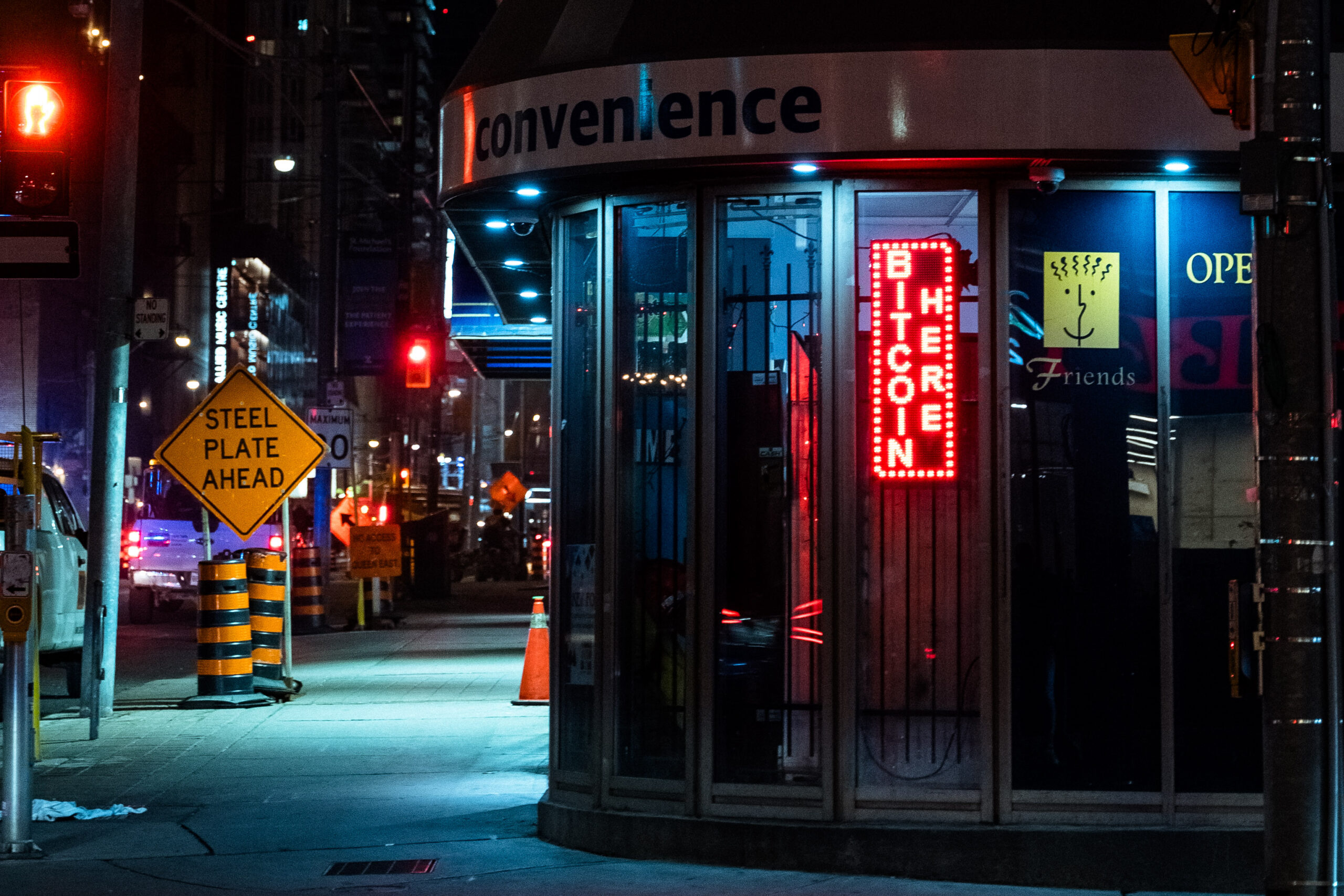
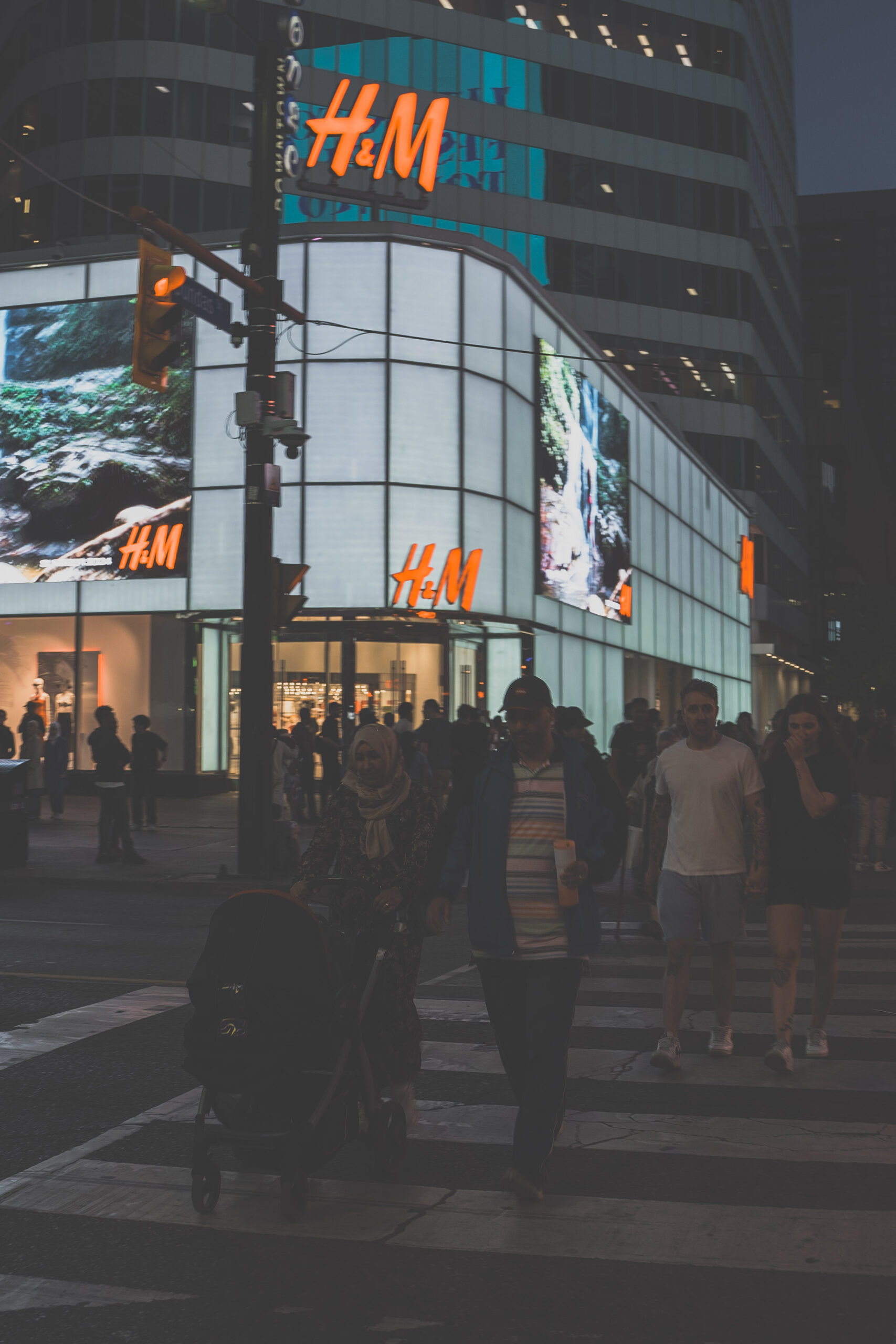
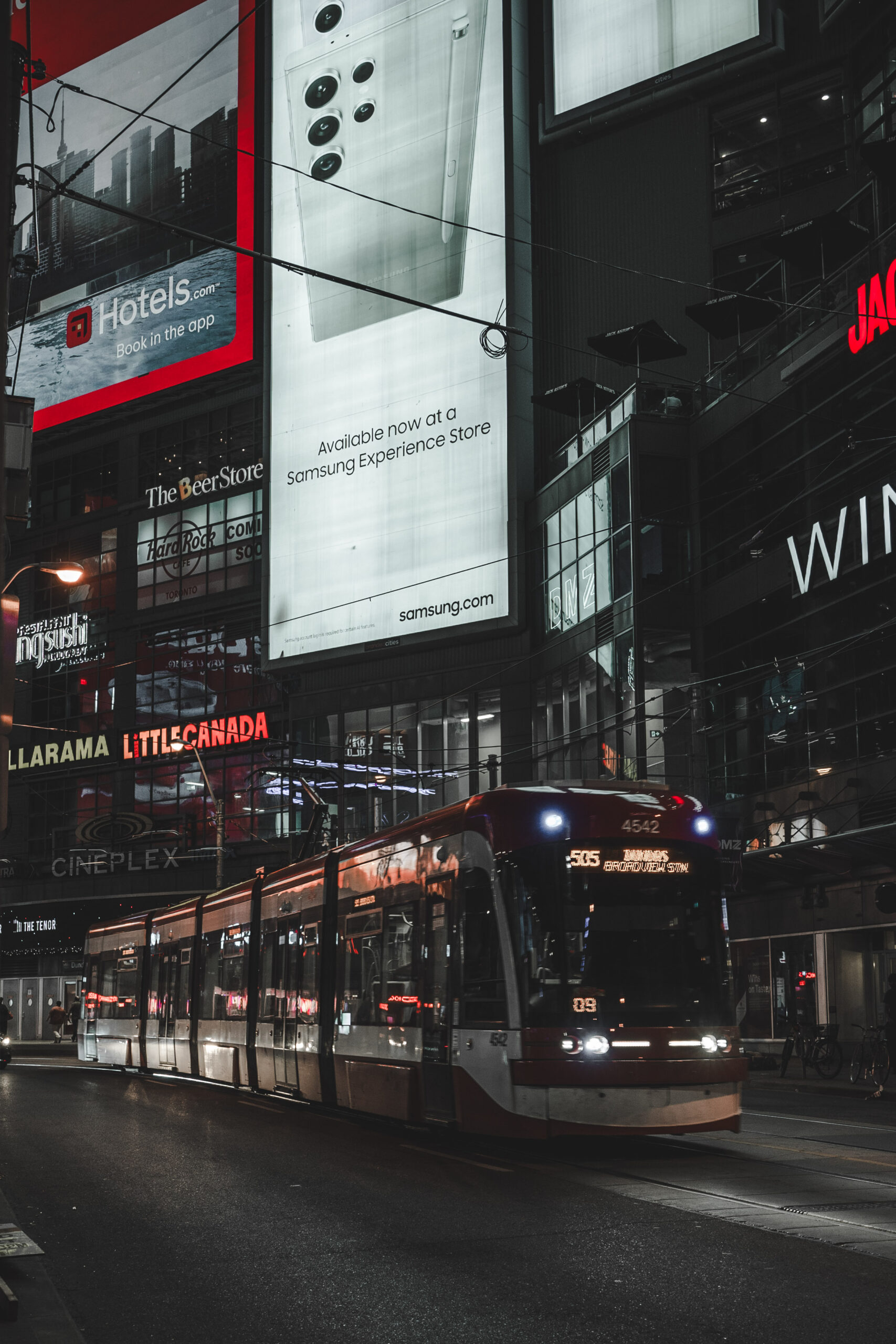
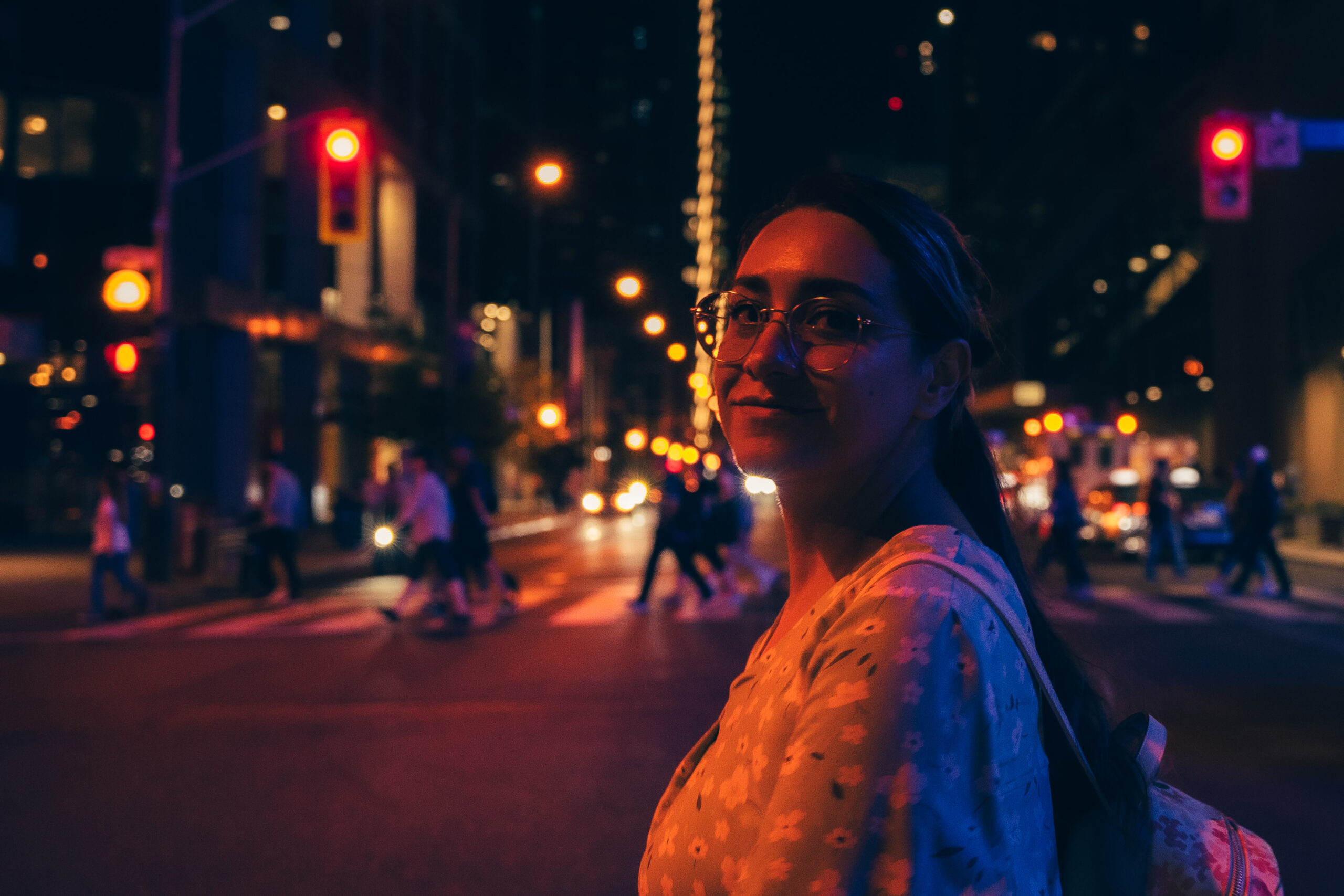
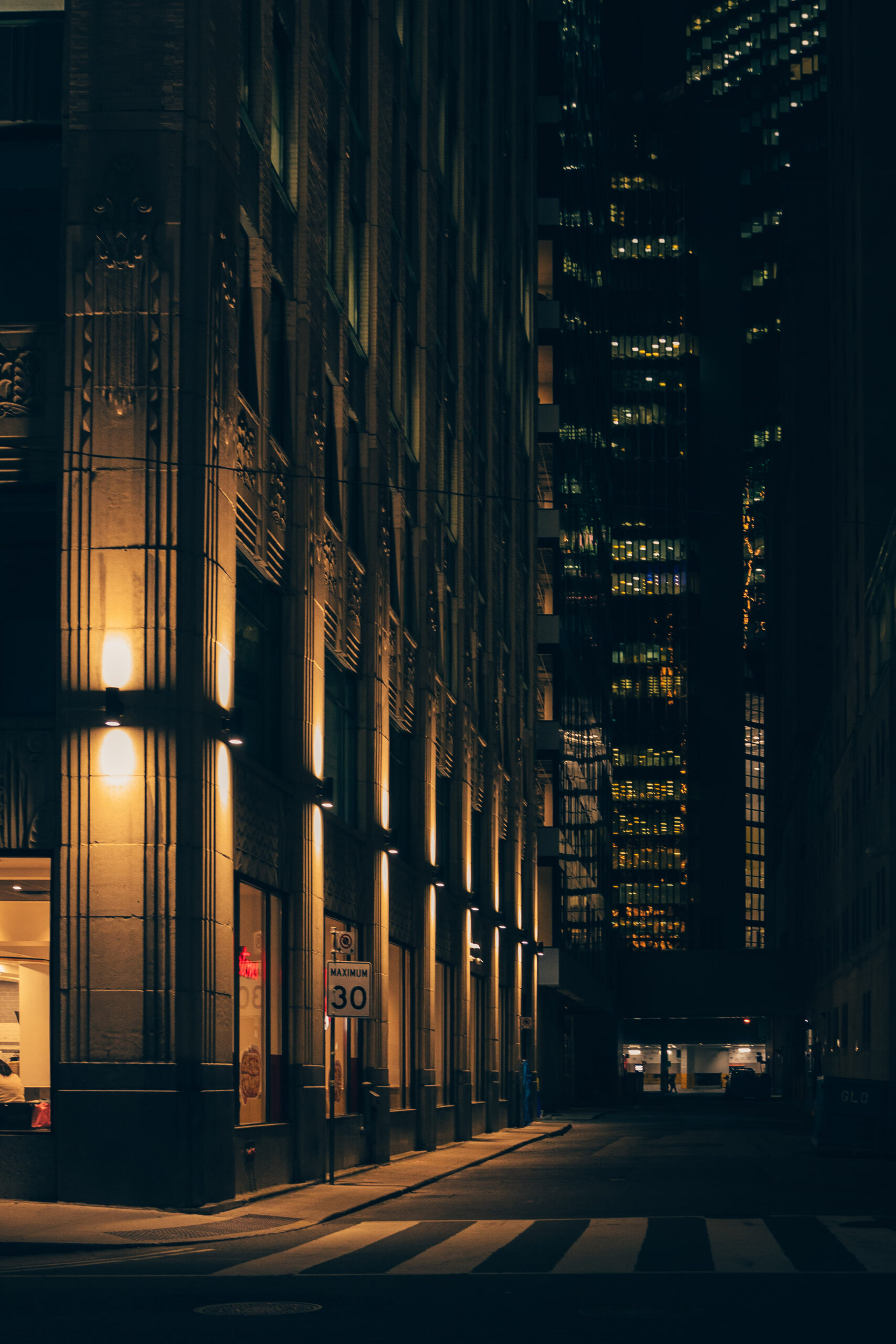
That first night was for getting our bearings. Quick photos on Yonge, in nearby squares, a first try of the subway. Tall, imposing buildings, lights reflecting off the glass, and that city rhythm that pulls you along. Also, a strange feeling: Toronto is safe, yes, but in some parts of downtown at night it feels a bit chaotic—lots of recreational cannabis (legal in Canada since 2018), parties, noise. Nothing serious. Just a contrast with the idea of “perfect order” you carry in your head.
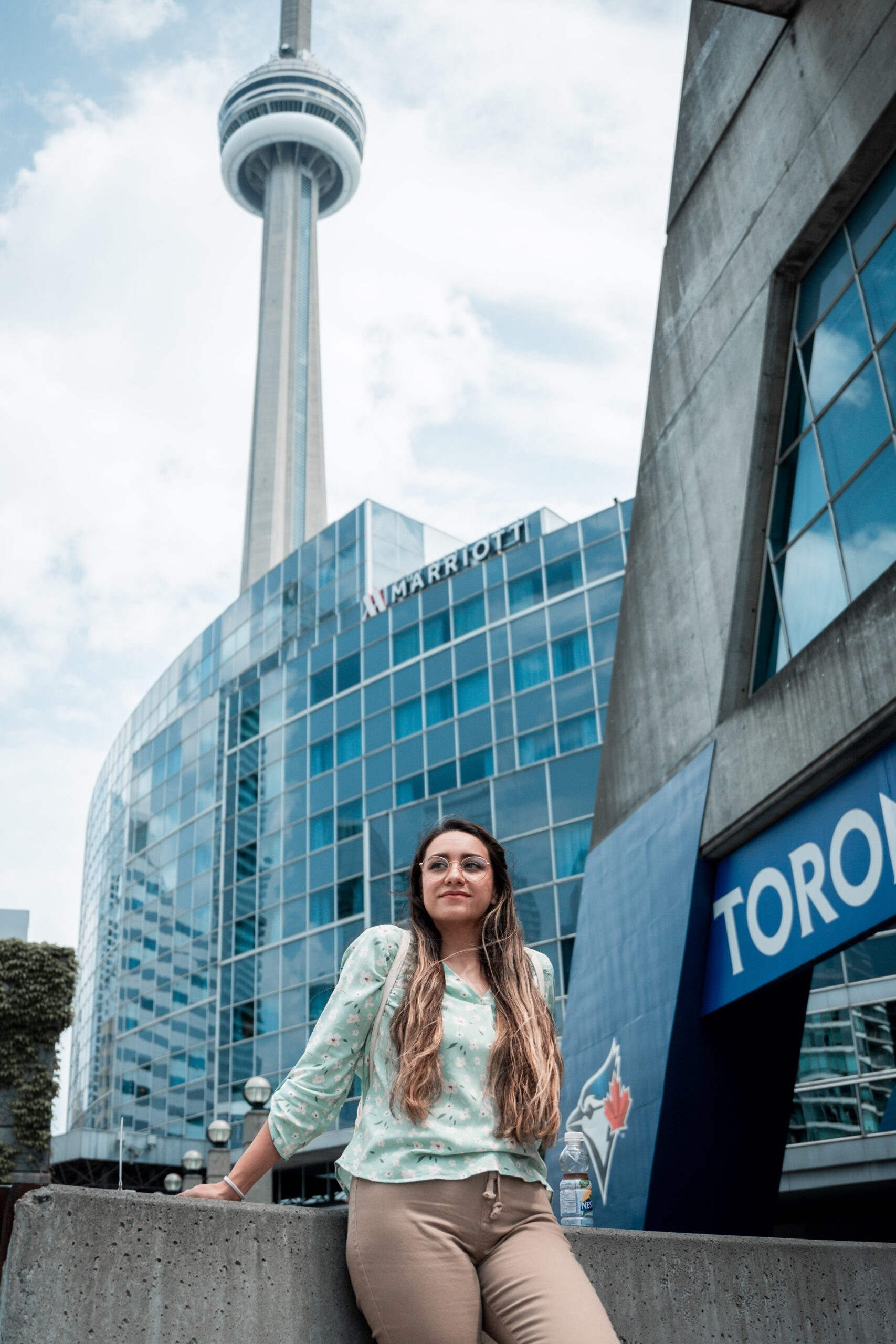
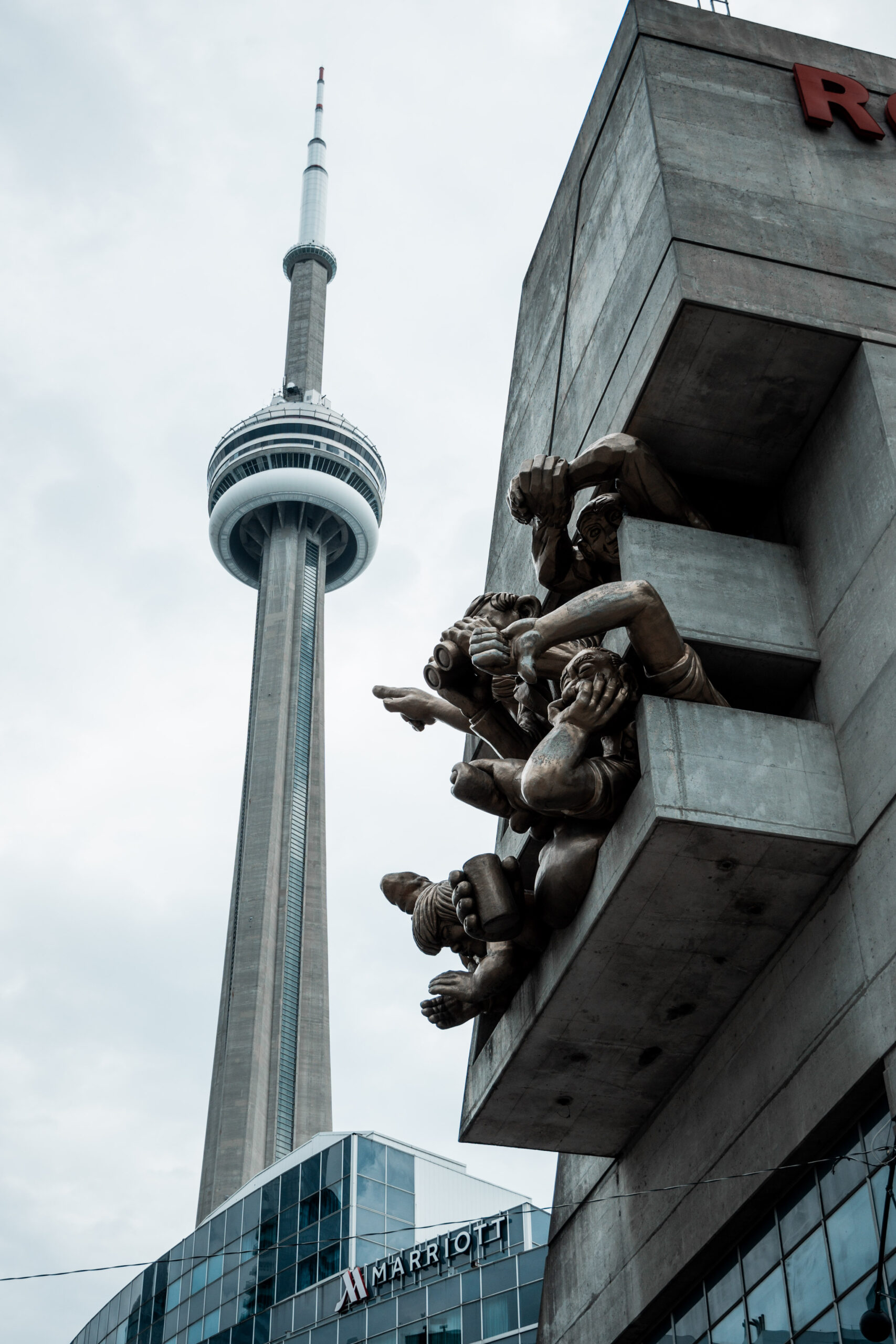
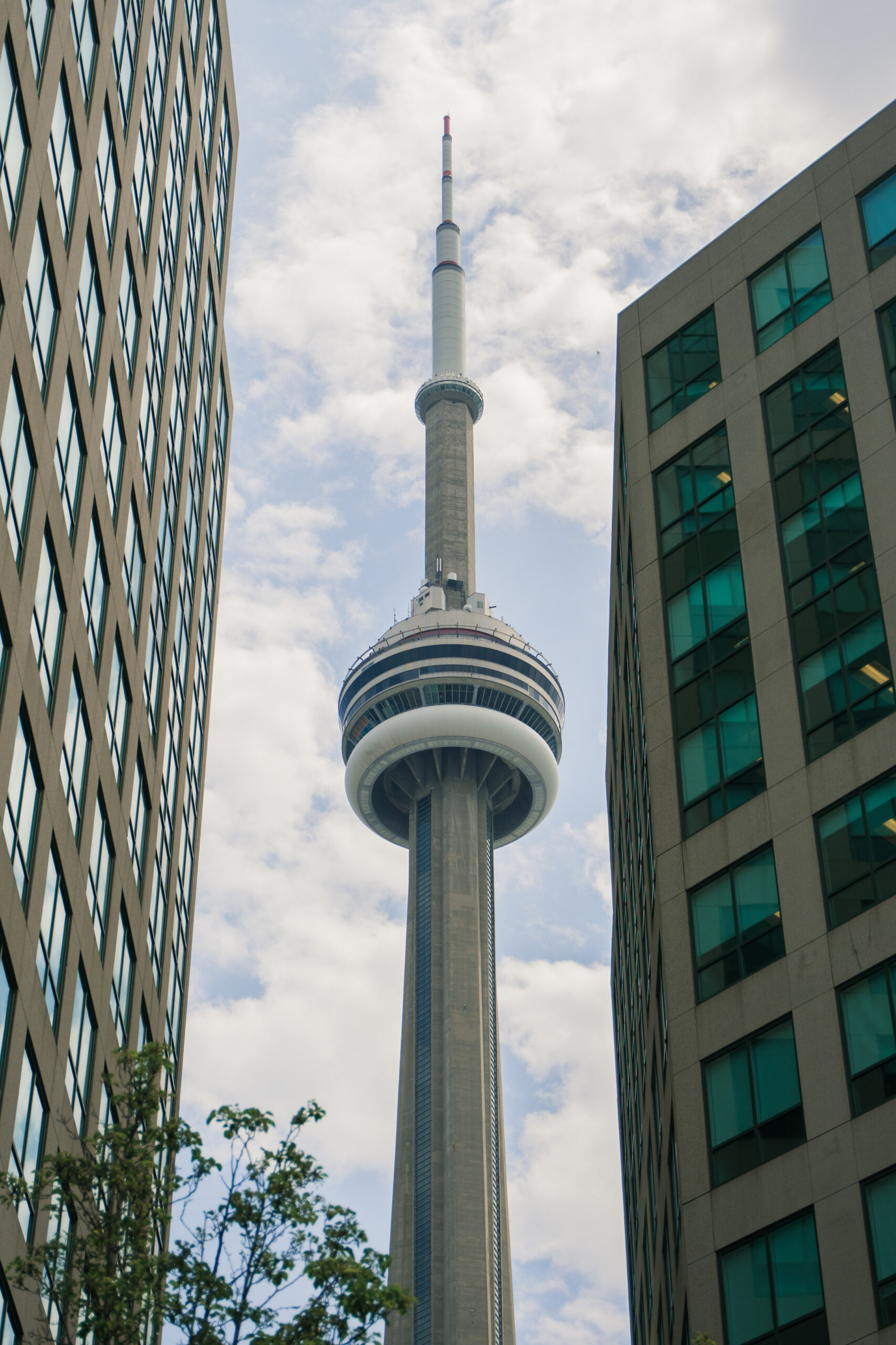
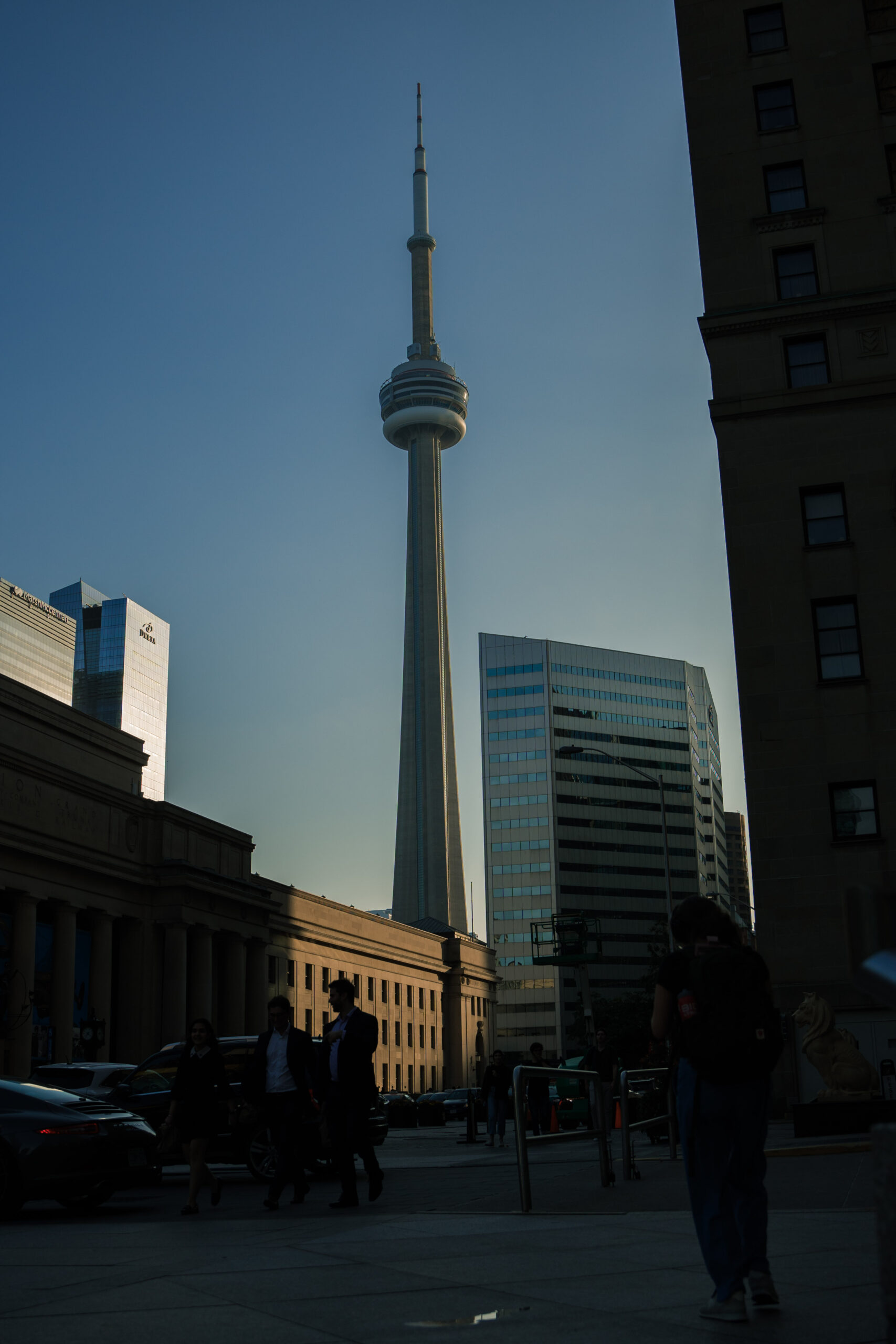
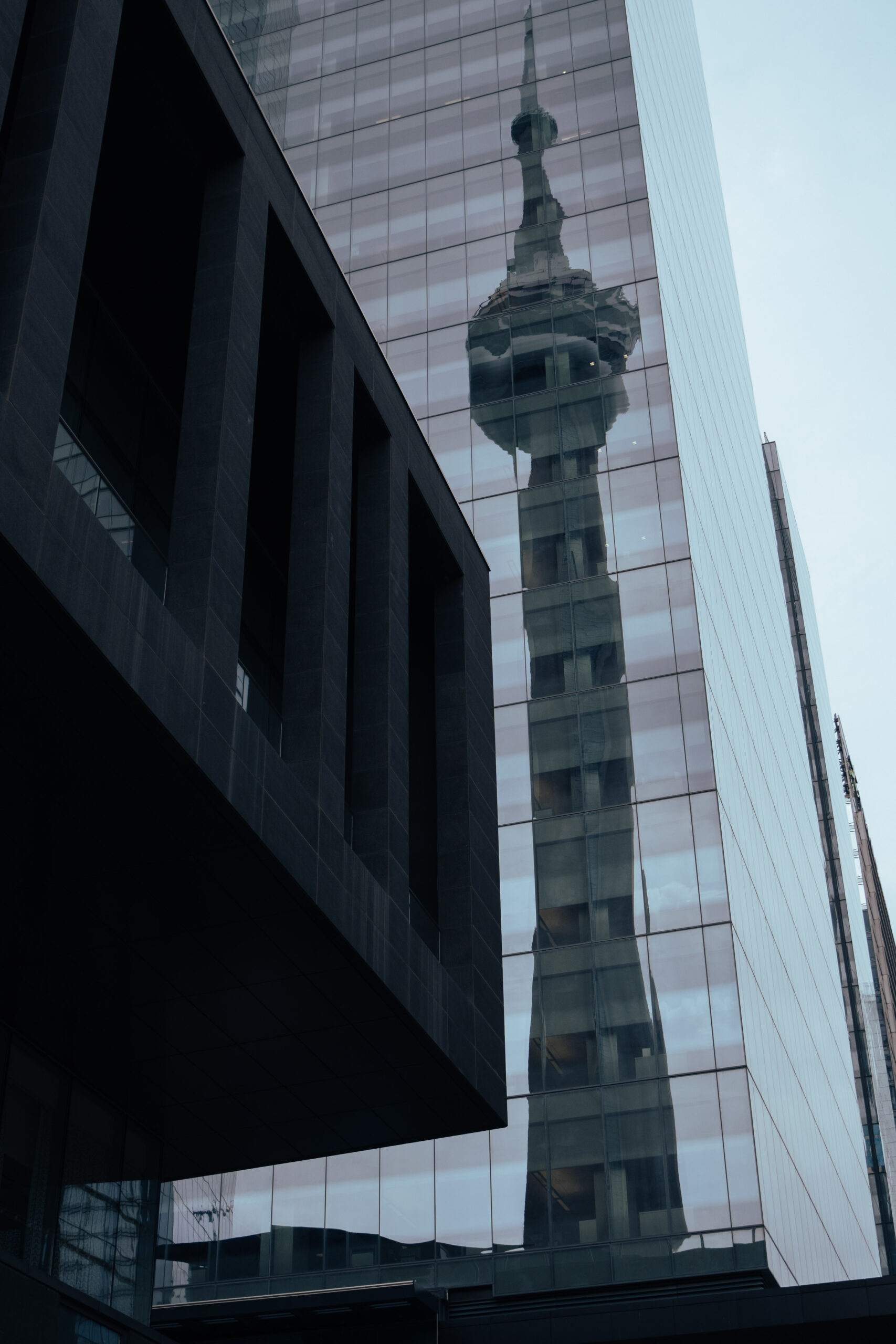
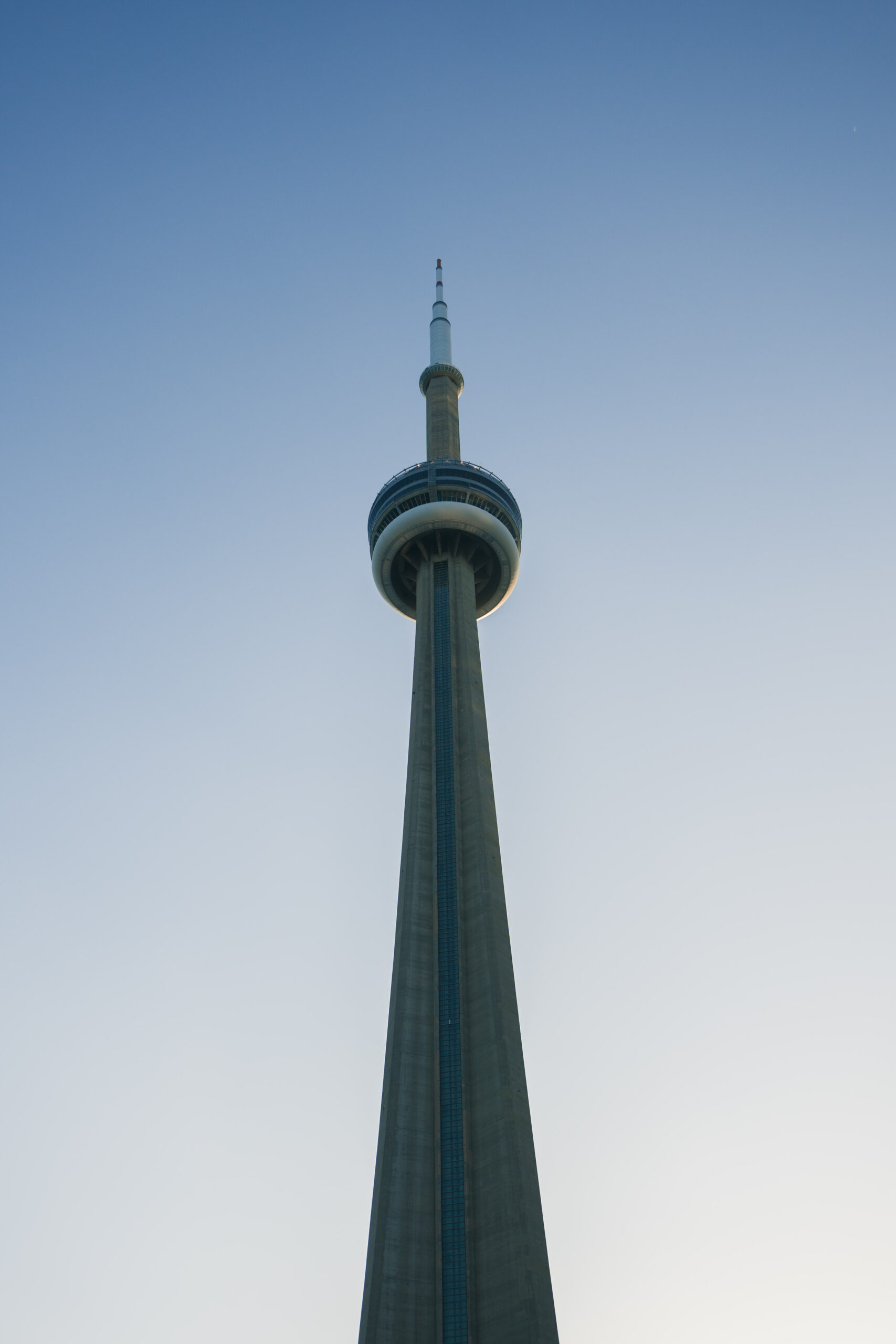
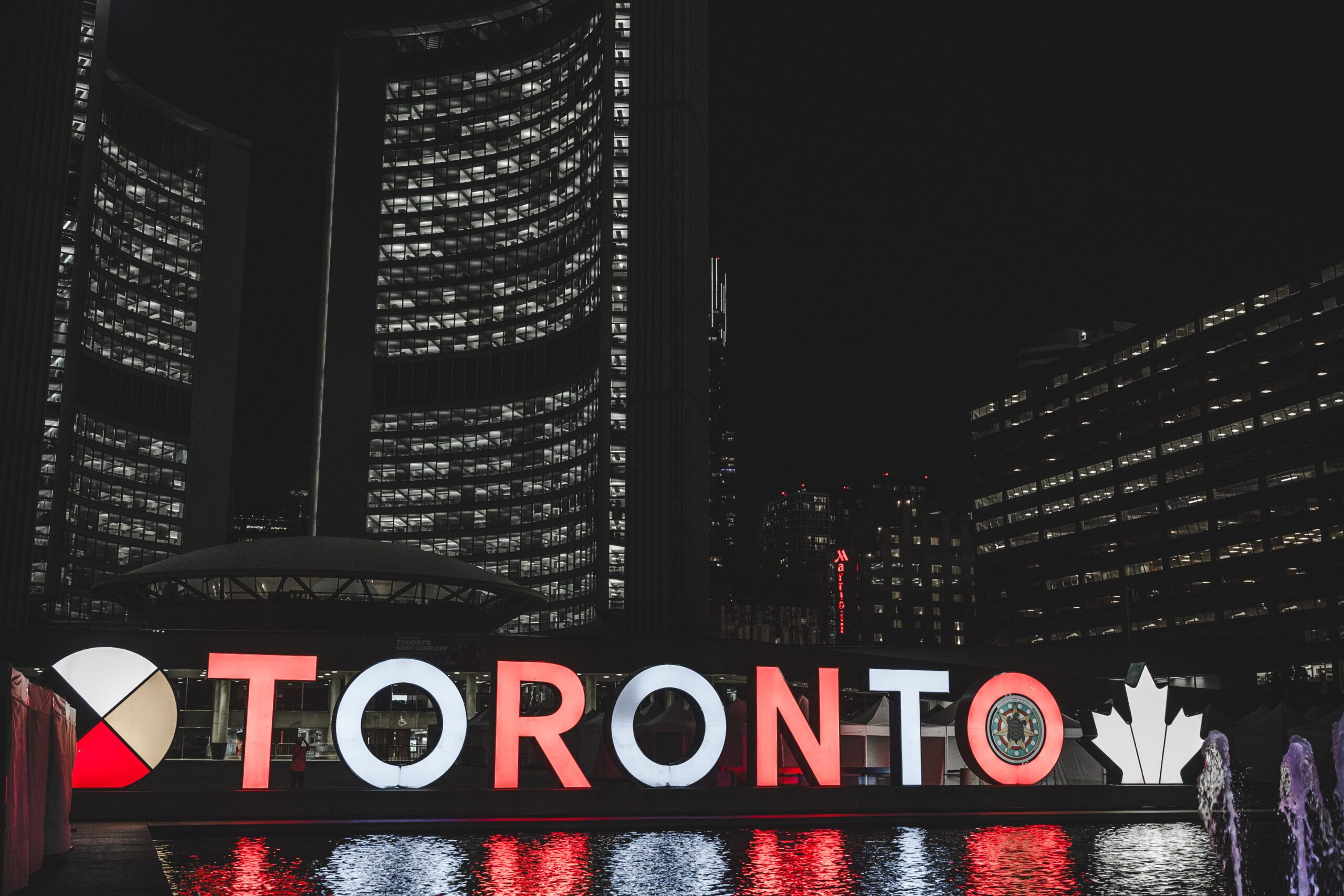
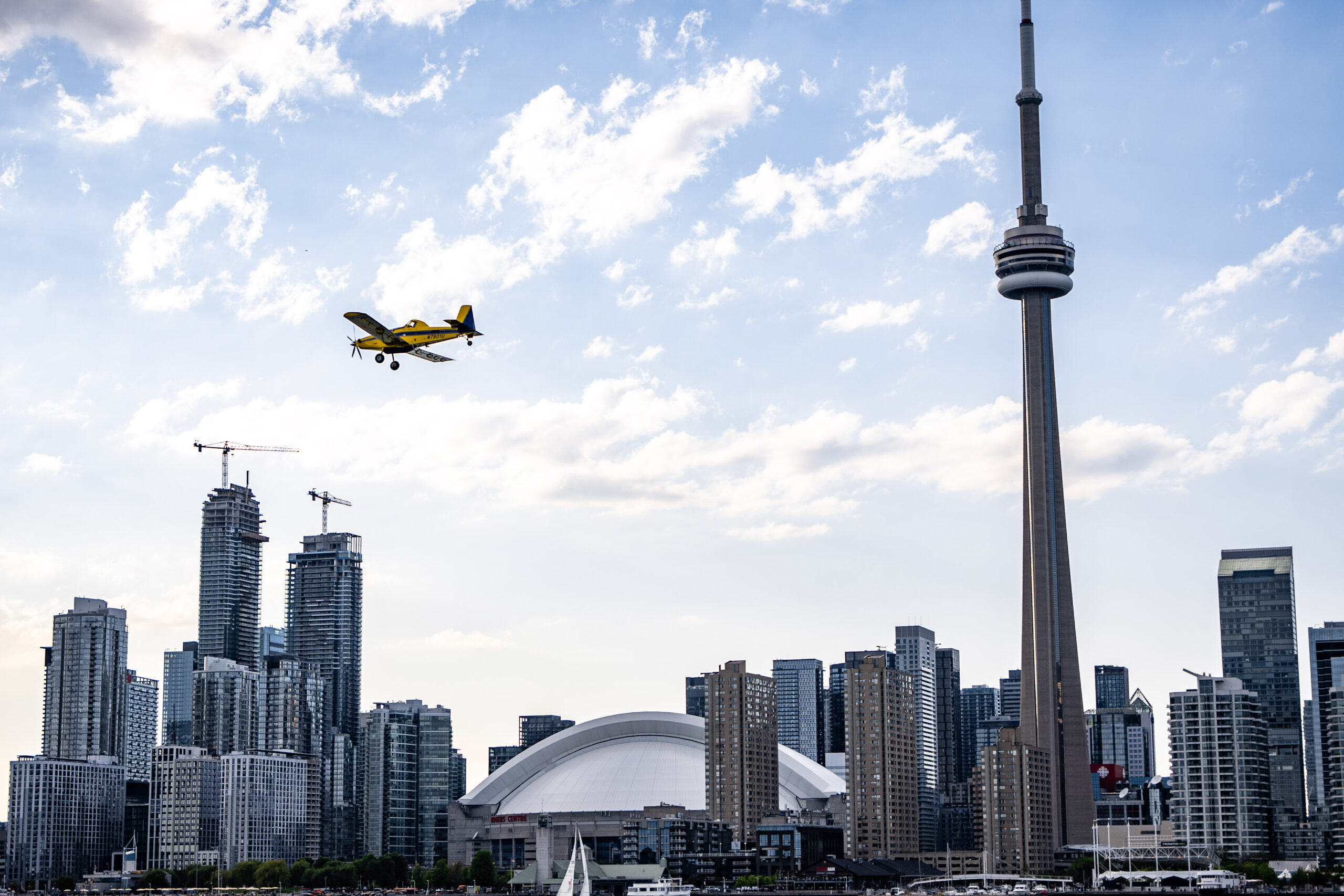
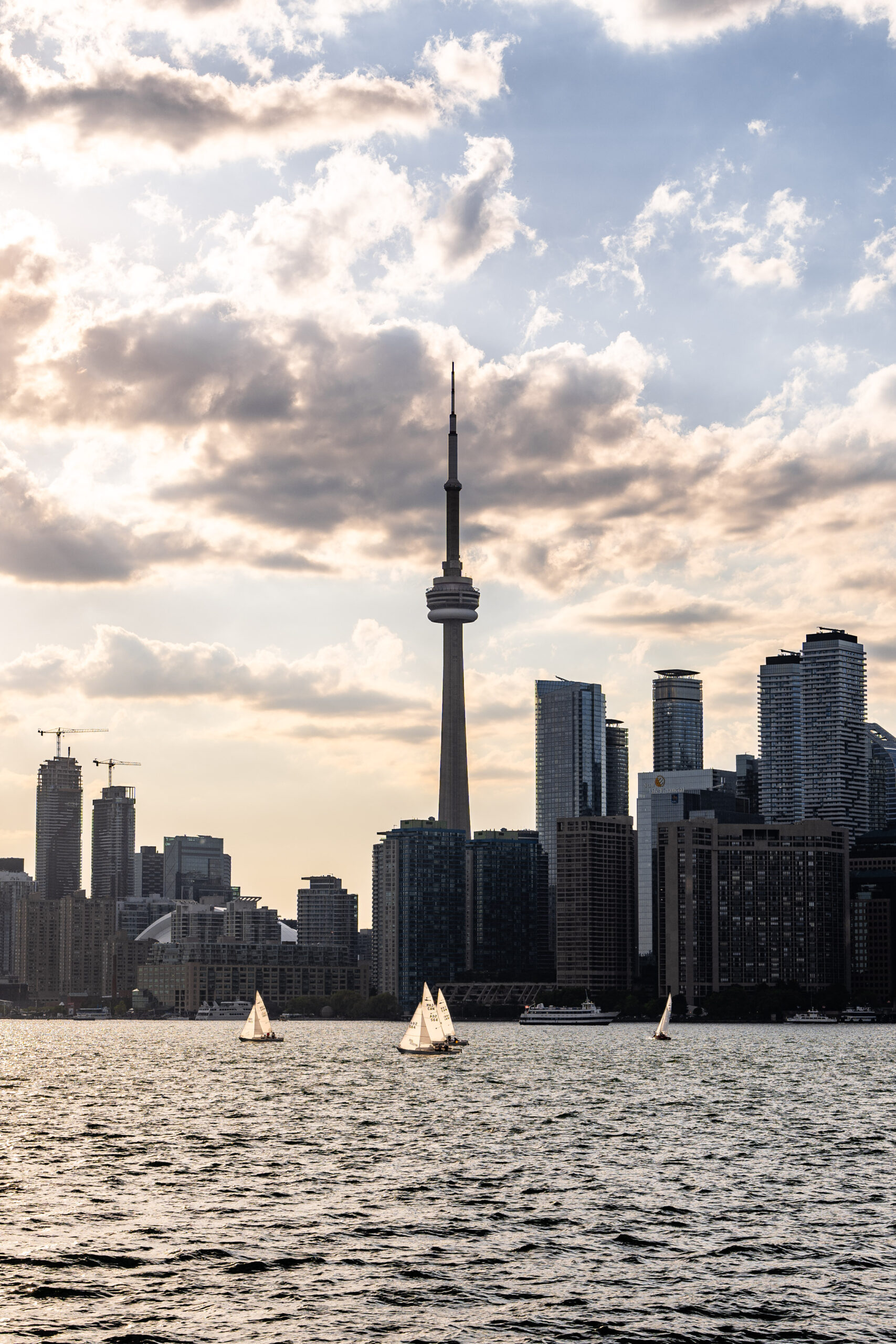
The next day was about the essentials. We started at Nathan Phillips Square, in front of Toronto City Hall: the modern, curved building standing beside the old stone City Hall, almost like a conversation between eras. And from there, Toronto’s top landmark: the CN Tower. For years it was the tallest freestanding structure in the world (until 2007) so it shows up from any direction. You peek around a corner and there it is, slicing between buildings, dominating the skyline.
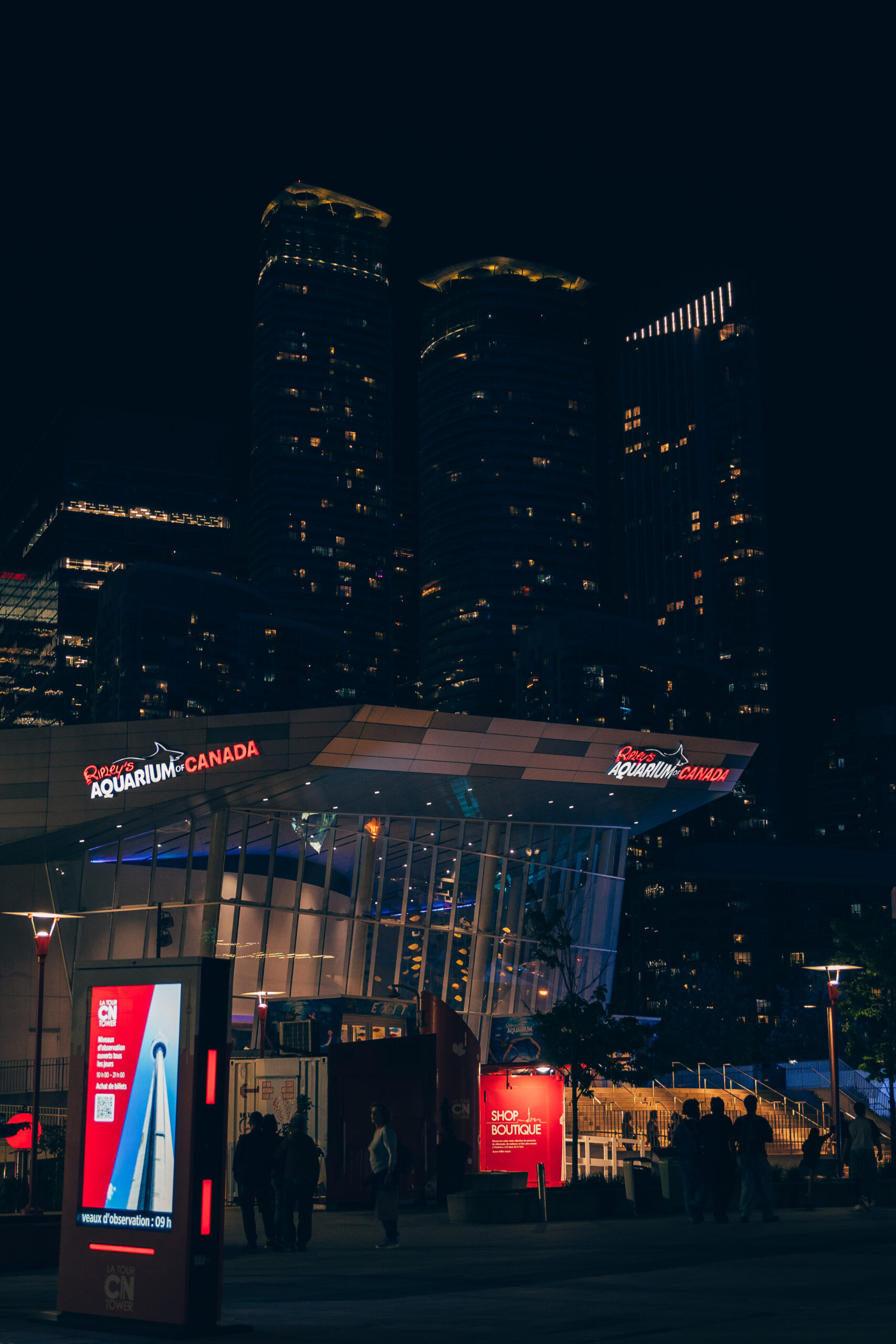
Before going up, we bought the CityPASS and visited Ripley’s Aquarium of Canada. Nice, well done, a must if you’re into aquariums. If not, maybe not life-changing. We stepped out into the plaza by the Rogers Centre (home of the Blue Jays), with everything so “compact”: CN Tower, aquarium, stadium, Union Station nearby. That part of the city makes Toronto feel walkable.
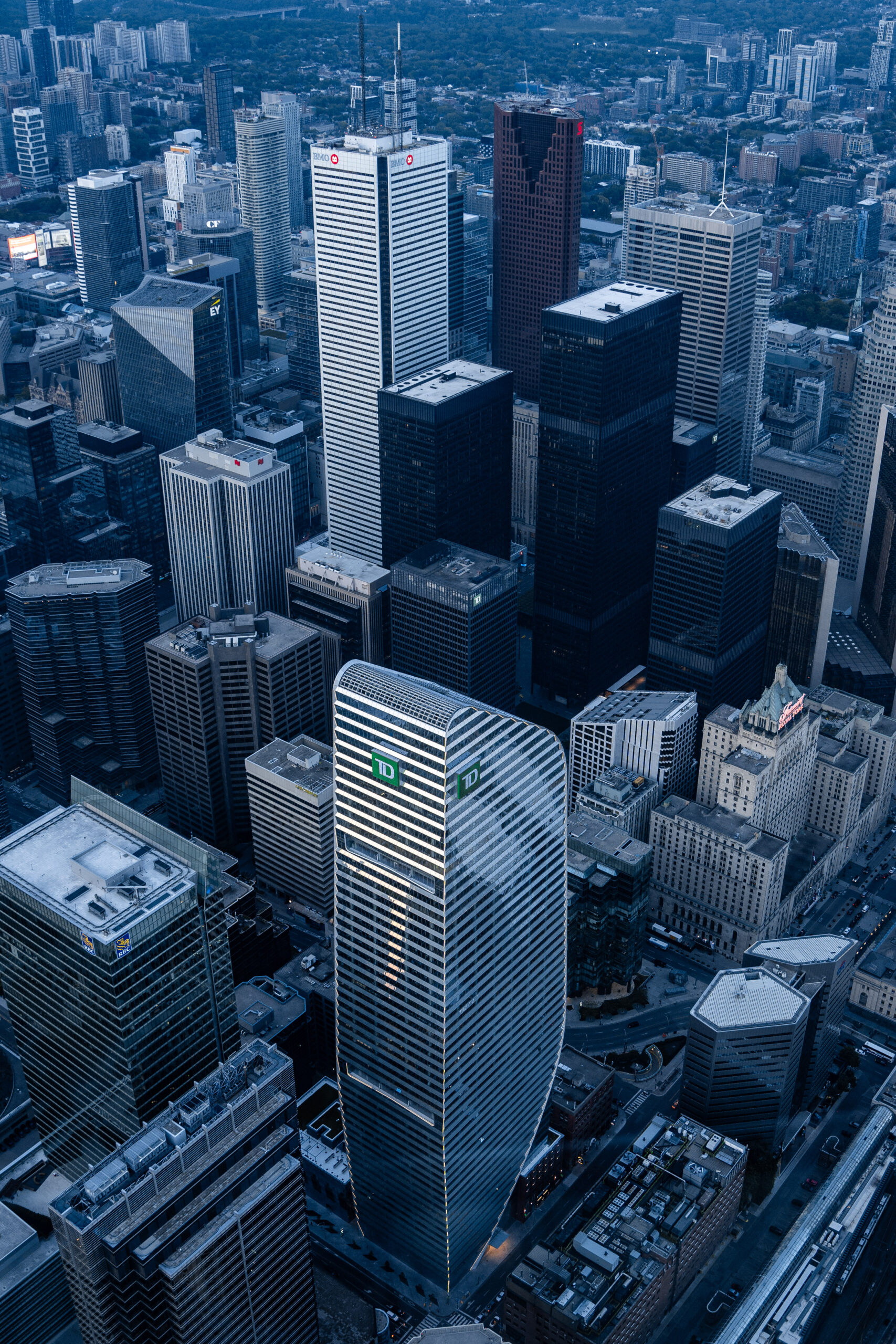
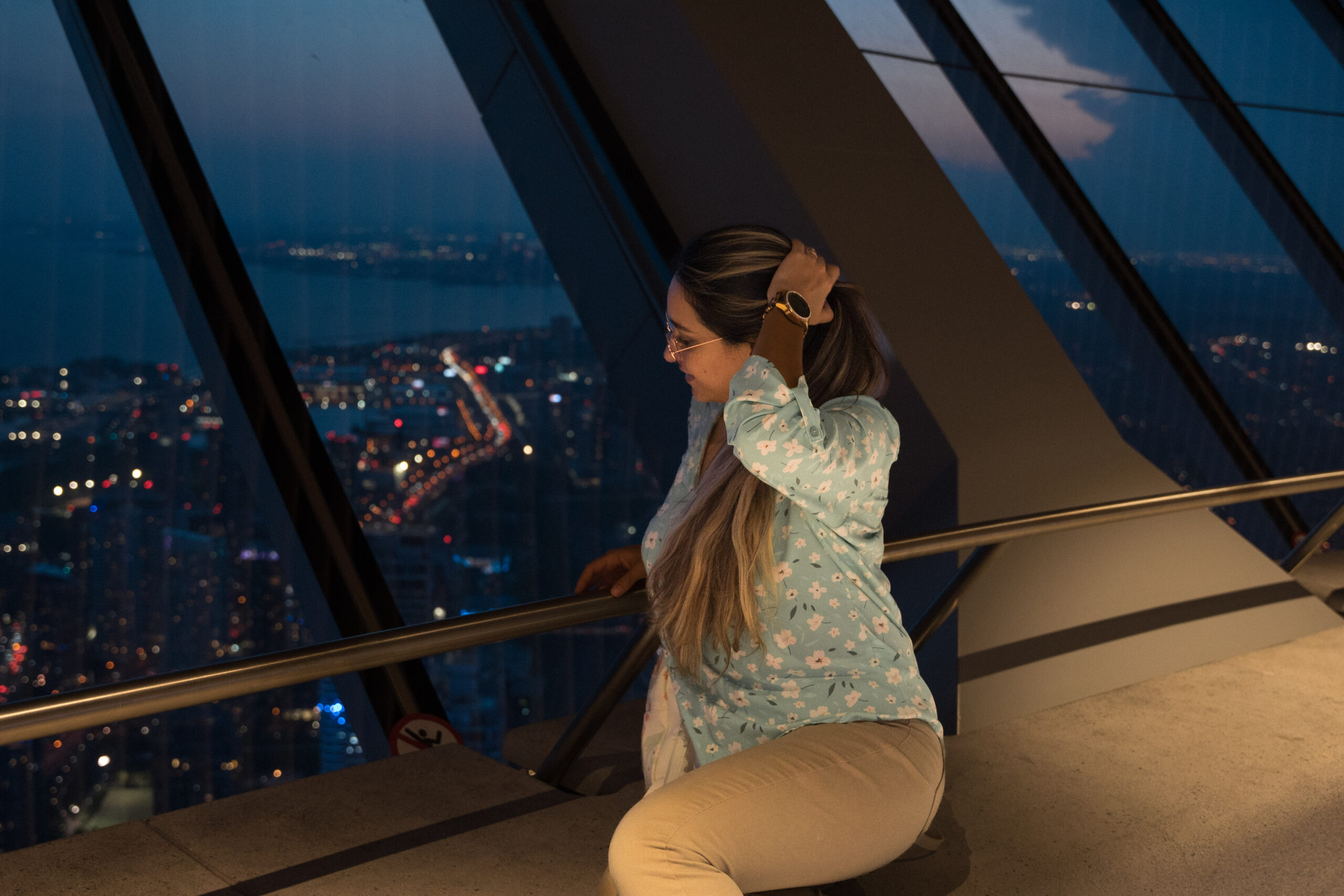
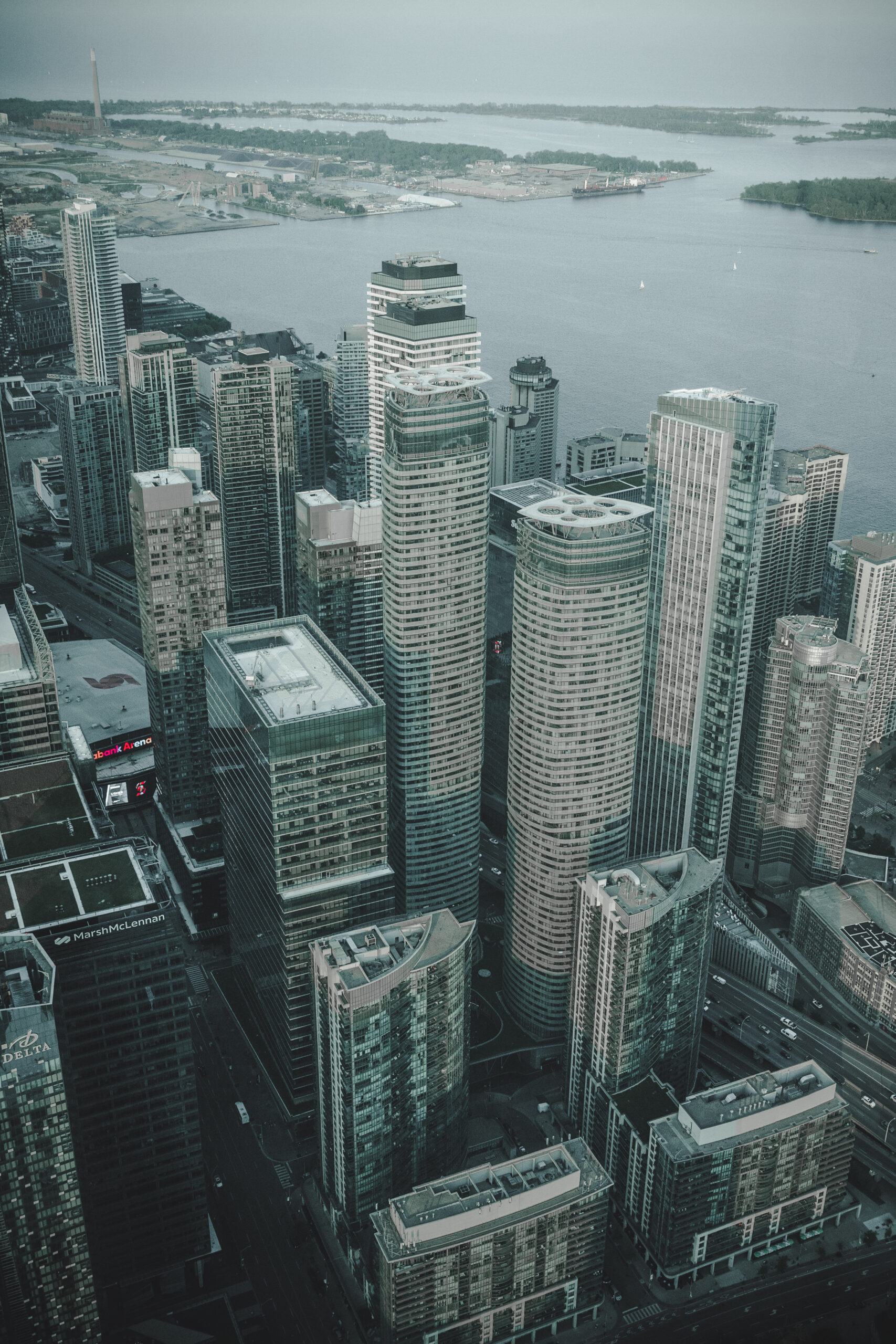
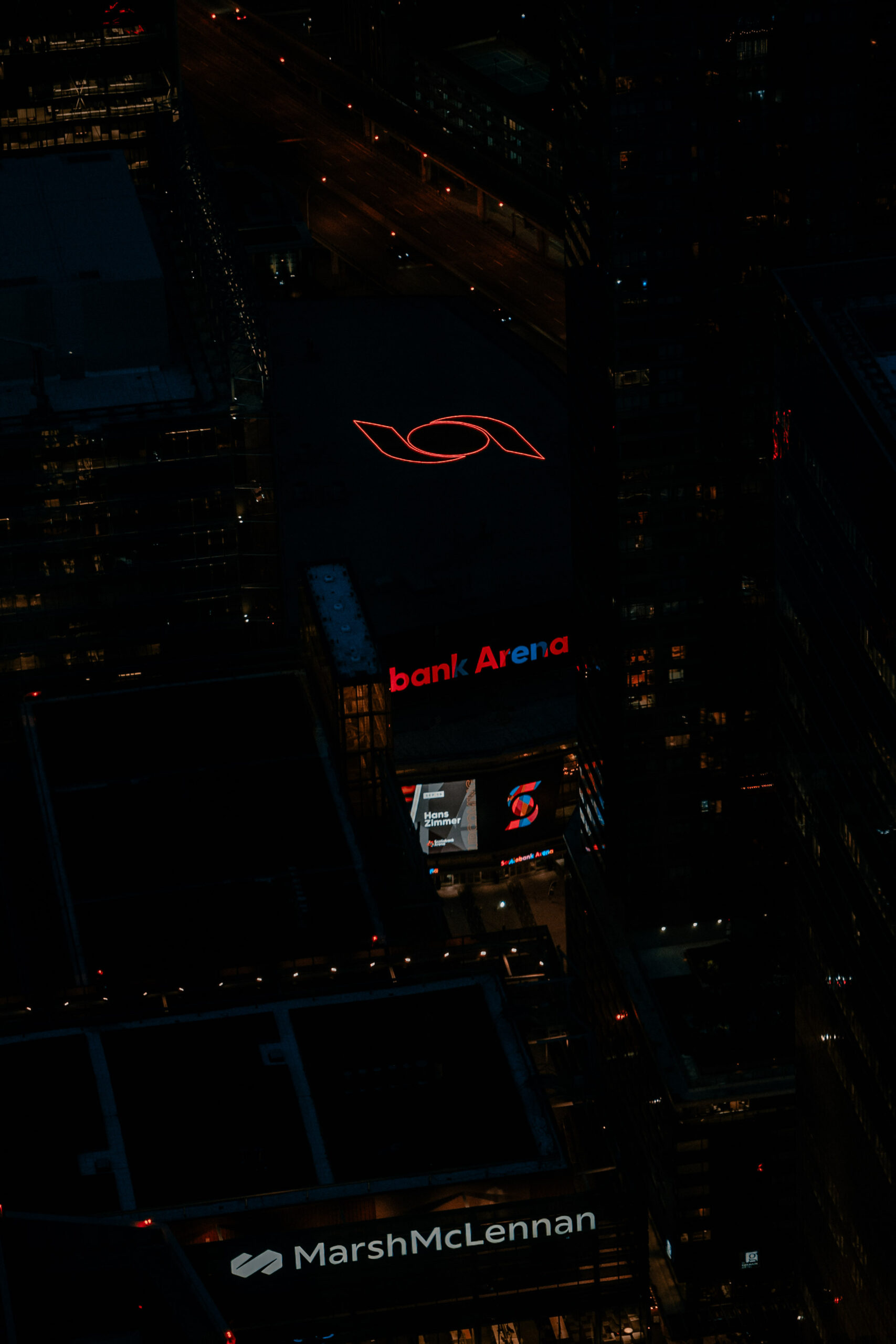
At sunset, we finally went up the CN Tower. We chose the main lookout (included with CityPASS). Wide, clear views: Lake Ontario, downtown, the perfectly laid-out geometry. I fly drones, so sometimes heights don’t impress me as much anymore, but up there you don’t want to come down. The city turns into a model, and you want to capture every grid.
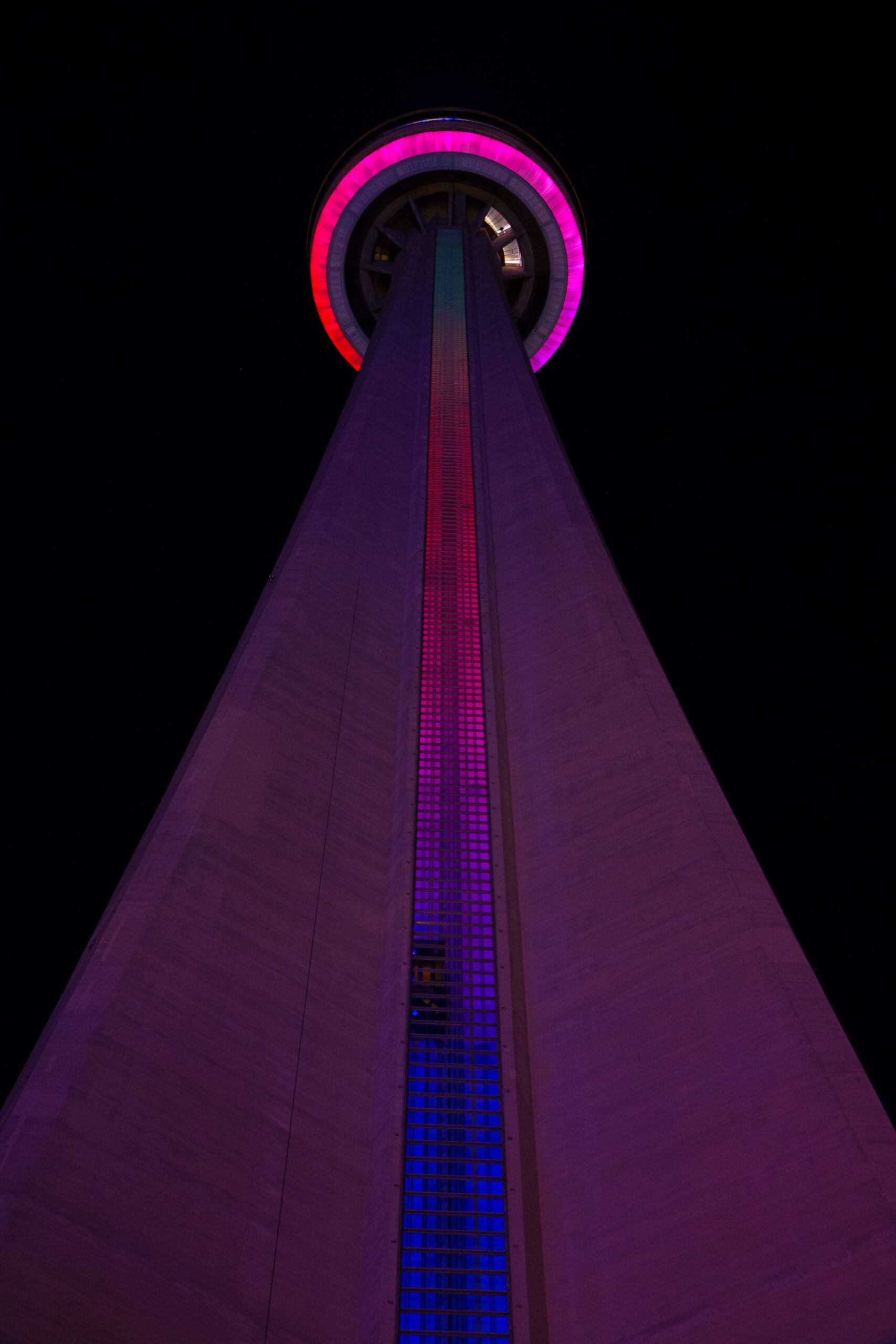
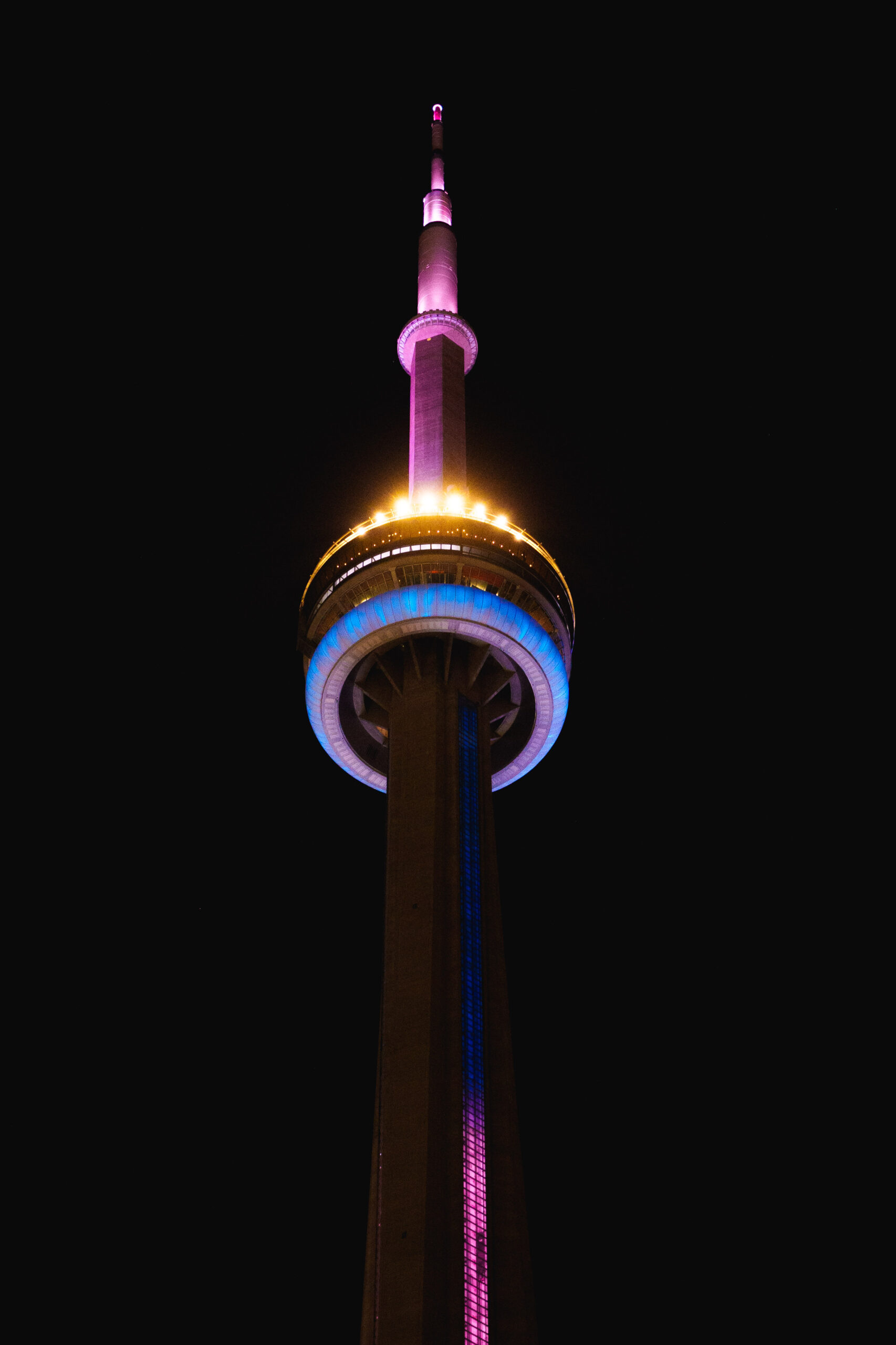
And later, at night from below, the tower lit up. A light show that doesn’t ask permission. More photos. More joy of just being there.
That same day ended with more walking and a return to Nathan Phillips Square. Toronto changes dramatically from day to night. And you’re glad it does.
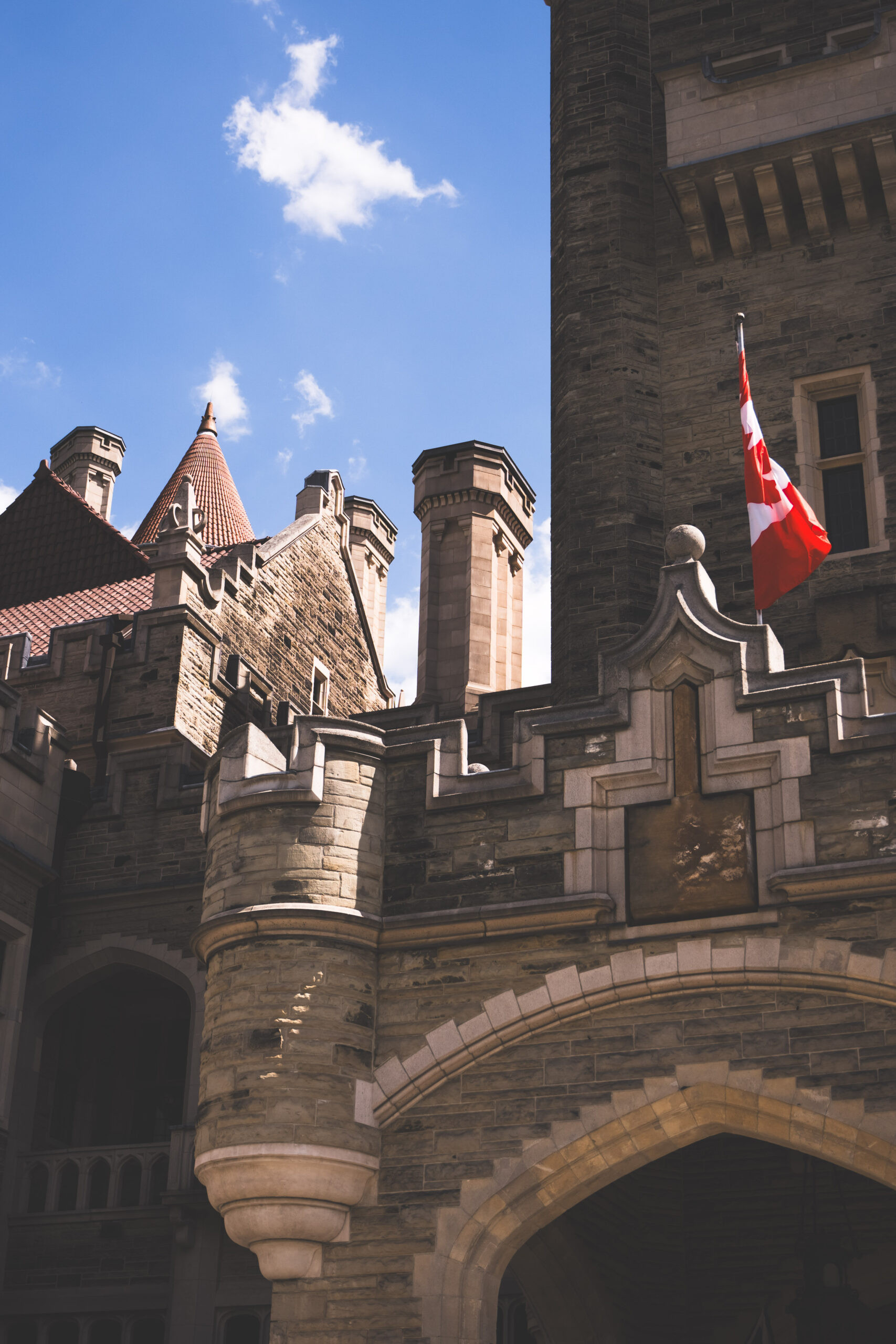
Day three was for the “secondary” stops. Casa Loma: a mansion built in the early 20th century by Sir Henry Pellatt, a millionaire who dreamed big and lost it all. Today it’s a museum, and yes, a little kitsch. But it has its charm: historic rooms, various exhibits, cars, long corridors. You don’t get bored because there’s always something new around the corner. From there, the views toward downtown are lovely: you see the clusters of towers and how Yonge Street ties the city together.
Then came the Royal Ontario Museum (ROM). A major museum, diverse, with natural sciences, world cultures, and design collections. In Mexico we have incredible museums, so you go in with that standard. Still, the ROM is very worthwhile.
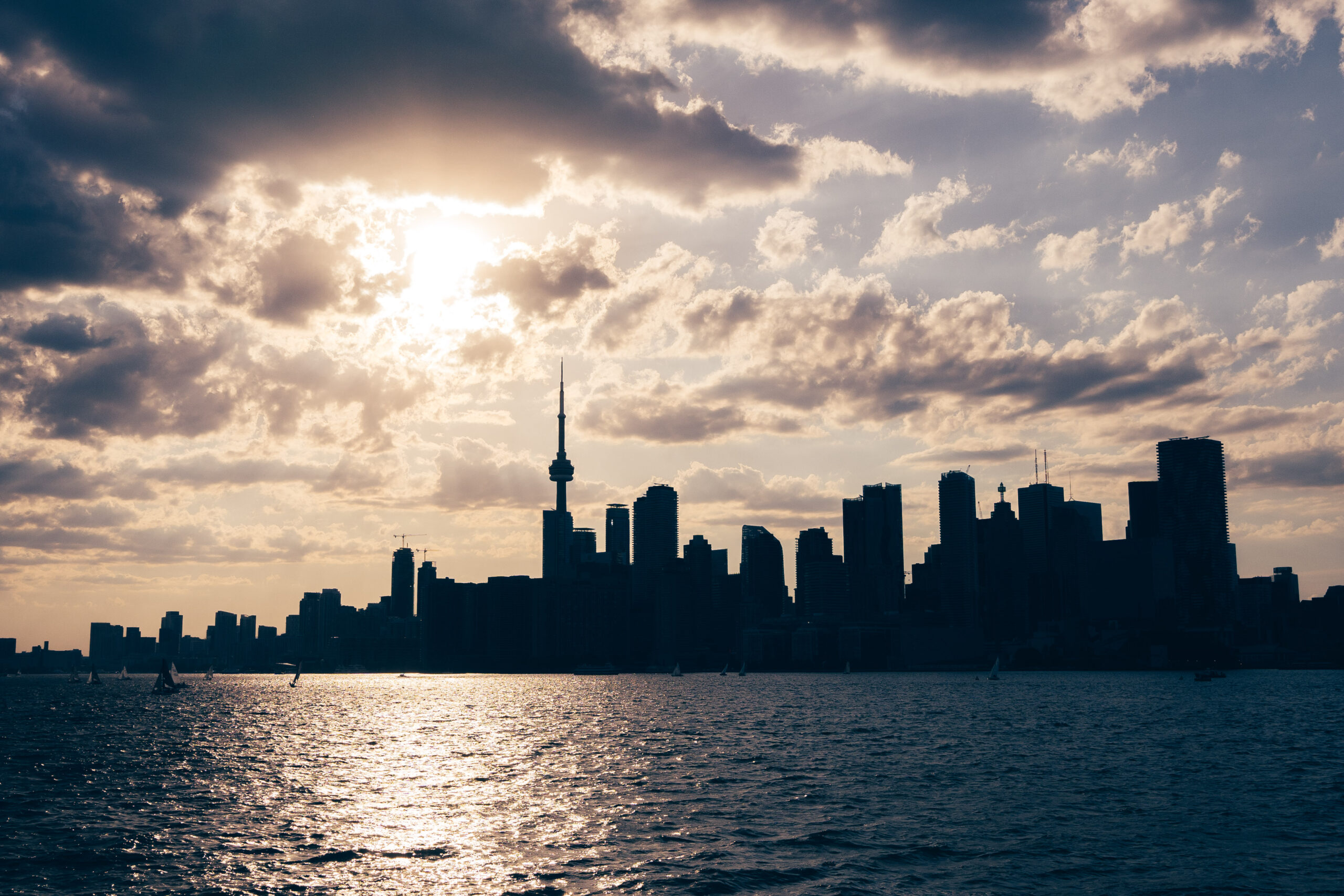
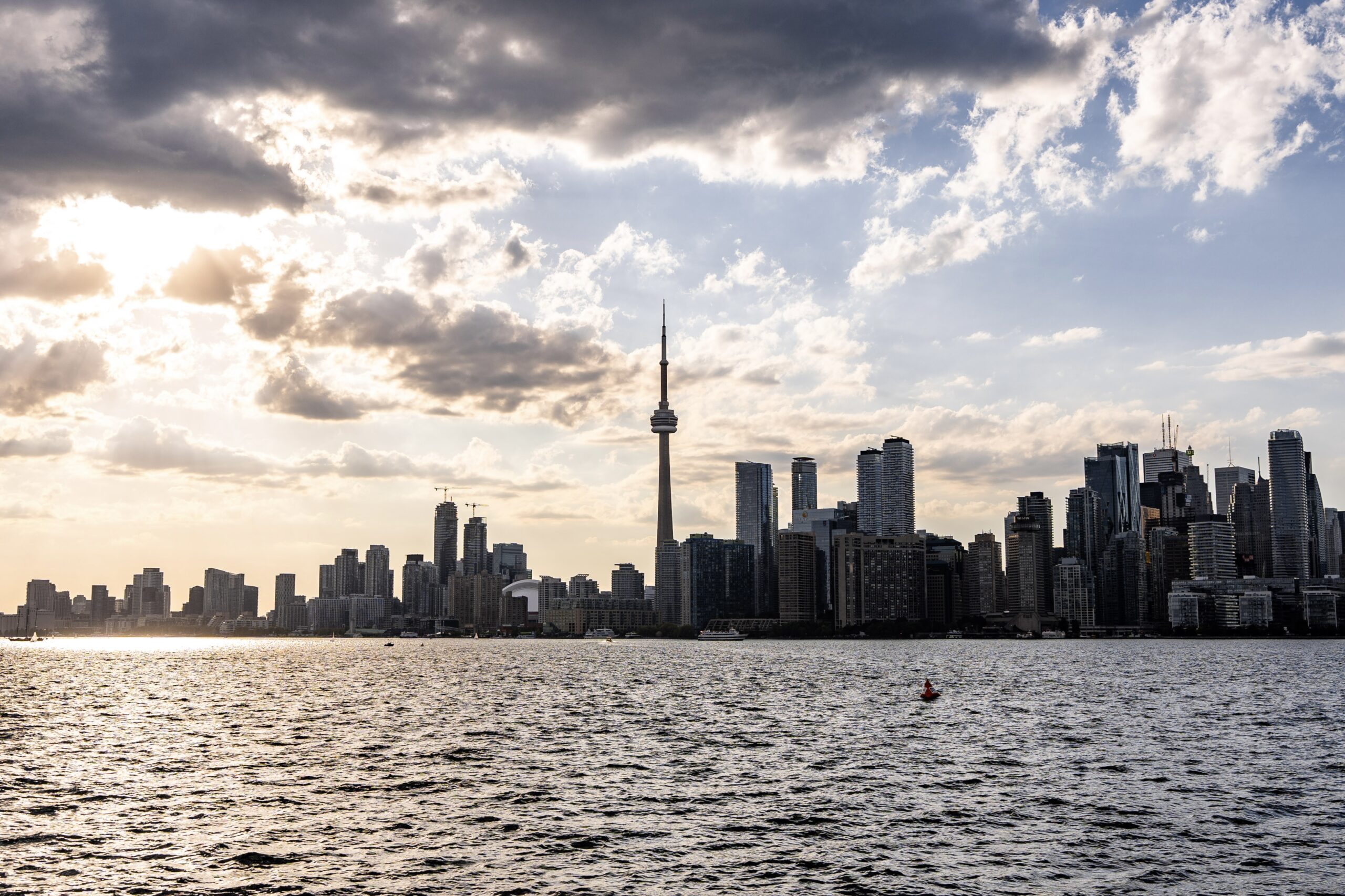
At night, we took a boat ride on Lake Ontario, out to the Toronto Islands. That’s the postcard moment: the full skyline, the exact silhouettes, the city as you see it in magazines. If you have just one evening for photos, make it that one.
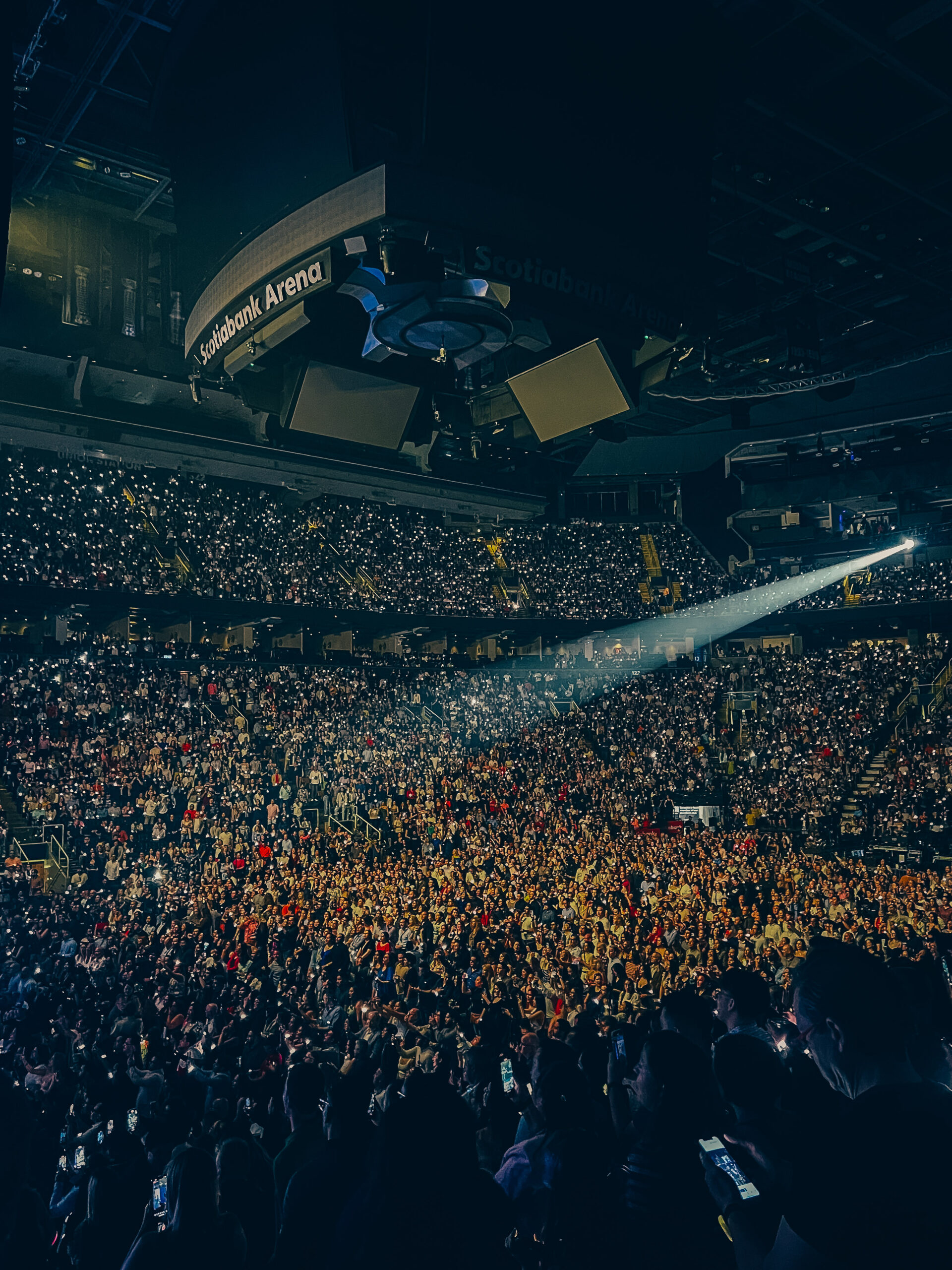
And then, serendipity: when we got off the boat, a concert was playing nearby. I wanted to see hockey (Toronto loves hockey), so we walked toward the noise, expecting a game. It wasn’t hockey—it was a Luis Miguel concert. For years we had tried to see him in Mexico, always complicated. And there, in Toronto, we found last-minute tickets at the entrance, close to the stage. The concert was good; Luis Miguel isn’t an over-the-top showman, but that night, the way it happened, it closed the day perfectly.
On the last day, it was time for the Toronto Zoo (another CityPASS entry). Not what excited us most, but once you’ve seen everything else, zoos work as an excuse to explore a different part of town. The best part was the trip: the subway was partly shut down, so they sent us on buses instead, and we got to see neighborhoods and streets we hadn’t before. Toronto looks different from a window you didn’t choose.
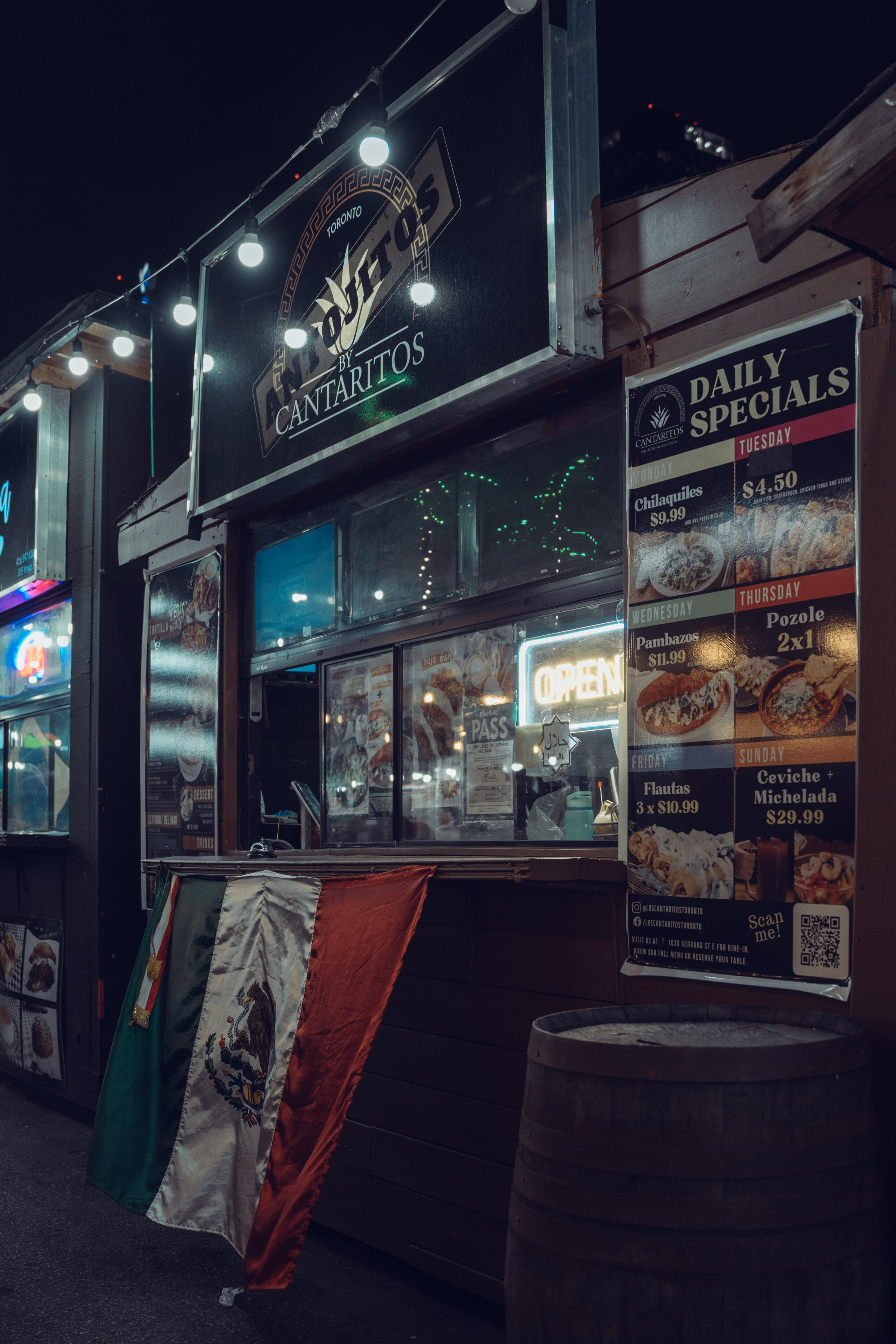
We came back downtown for our goodbye: last photos, familiar places revisited with new affection, and yes—Mexican food. Homesickness is real. Eating something that tastes like home at the end of a trip is almost a ritual.
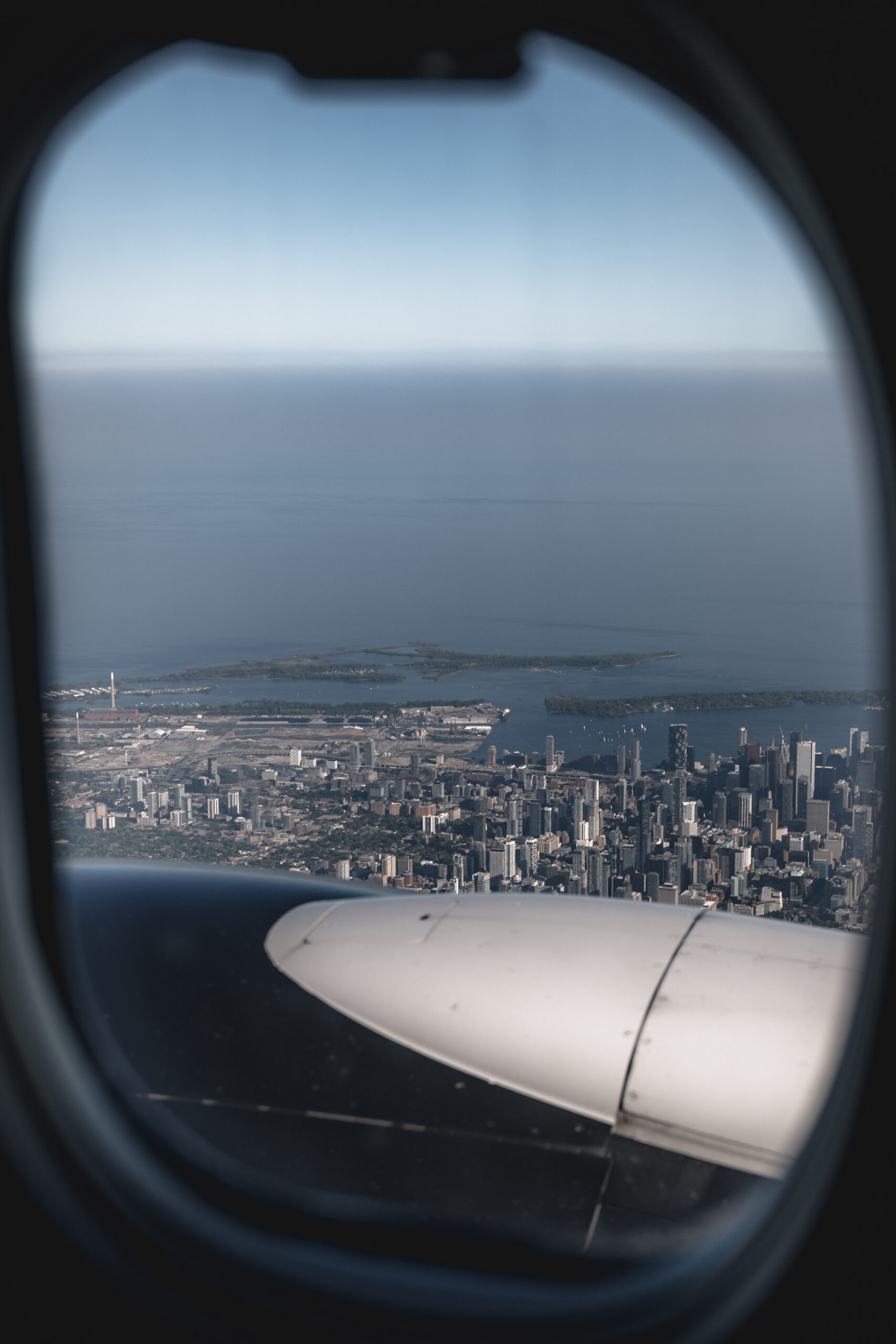
Union Station again. UP Express again. Pearson. Flight to Mexico City. The end.
I won’t say Toronto changed our lives. It didn’t. But it was a beautiful trip, smooth, to a multicultural city that greets you with a mix of languages, faces, and rhythms. Would I go back? Yes, because it’s lovely. Would I choose it again as a main vacation destination? Maybe not: I feel we squeezed out the essentials, and to get more from it you’d need to go with a local—experience the neighborhoods, concerts, film, that Toronto you live, not just visit.
But if someone asks if I recommend it, I say yes. Toronto may not transform you, but it stays with you. And sometimes, that’s enough.